


Understanding Nits and Brightness: How to Select an LED Screen for Bright Environments
Sep 17, 2025
Leave a message
Understanding Nits and Brightness: How to Select an LED Screen for Bright Environments
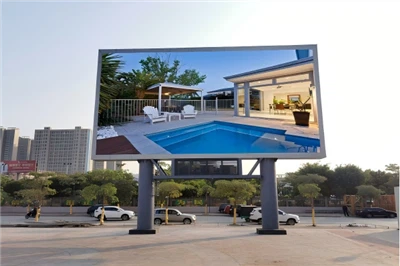
In the rapid development of modern information display technology, LED displays have become core information carriers in various venues-such as sports stadiums, commercial centers, transportation hubs, and outdoor billboards-thanks to their excellent visual performance, flexible installation methods, and strong environmental adaptability. Among these applications, particularly in "high-brightness environments" with direct sunlight or intense artificial lighting, display brightness becomes the key parameter determining visibility and information transmission efficiency. Understanding the scientific meaning of the brightness unit "nits" and mastering its practical application mechanisms form the foundation for selecting LED displays scientifically for high-brightness environments.
1. What is a "Nit"? The Scientific Definition of Brightness
"Nit" is the internationally recognized unit of brightness, officially known as "candela per square meter" (cd/m²). It measures the luminous intensity emitted per unit area of a surface light source, reflecting the human eye's perception of "brightness." Unlike "lumen," which measures the total luminous flux from a light source, the nit focuses on the density of light output per unit area, aligning more closely with the human eye's intuitive sense of how "bright" a screen appears.
For example, an LED display with a brightness of 1000 nits emits a luminous intensity of 1000 candelas per square meter. The higher this value, the better the screen's visibility in bright environments. Typical indoor LCD monitors have brightness levels ranging from 250 to 400 nits, whereas LED displays used in outdoor or high-brightness environments often require thousands or even tens of thousands of nits.
Brightness is typically measured using a professional luminance meter, with minimal ambient light interference and at a standard viewing angle-usually directly in front. It should be noted that brightness is not constant and can be influenced by factors such as drive current, ambient temperature, aging, and signal input. Therefore, when selecting a display, attention should be paid to the manufacturer-provided "typical brightness" and "maximum brightness" ranges, evaluated in conjunction with actual usage conditions.
2. Definition and Challenges of High-Brightness Environments
A "high-brightness environment" refers to locations where significant natural or artificial light sources result in background illumination far exceeding that of typical indoor settings. Common high-brightness environments include:
Fully open outdoor spaces: such as stadiums, plazas, and highway-side billboards, which are constantly exposed to direct sunlight.
Semi-open spaces: such as under stadium domes, railway station platforms, and shopping mall atriums, which, despite some shielding, are still affected by strong natural light.
Environments with intense artificial lighting: such as broadcast studios, stages, and exhibition centers, where high-power lighting equipment creates extremely high illumination levels.
In these environments, the core challenge for displays is contrast degradation. When ambient light intensity approaches or exceeds the screen's brightness, the emitted light is "washed out," causing images to appear faded, colors to distort, text to blur, and, in severe cases, content to become completely illegible. This is especially evident with outdoor displays under midday sunlight-even if the screen is very bright, if it cannot "overpower" sunlight reflection and scattering, viewers may still find it difficult to see clearly.
Therefore, in high-brightness environments, display brightness must significantly exceed ambient illumination to maintain sufficient contrast and ensure readability. Research indicates that for good visibility, display brightness should be at least 2 to 3 times the ambient illumination; under extreme conditions (such as direct midday sunlight), this ratio may need to reach 5 times or higher.
3. Brightness and Human Visual Perception: Physiological and Psychological Factors
Selecting LED display brightness involves not only matching physical parameters but also considering human physiological perception and psychological comfort. Human perception of brightness is not linear but logarithmic-doubling brightness does not double perceived brightness. Additionally, the human eye has strong dynamic adaptation capabilities, adjusting from dark to bright environments within milliseconds, though this process can cause temporary visual fatigue.
In high-brightness settings, if display brightness is too low, the eyes must strain to discern content, potentially causing fatigue. Conversely, if brightness is too high-especially at night or in low-light conditions-the screen may appear glaring, causing light pollution and reducing viewer comfort. Therefore, an ideal LED display should feature dynamic brightness adjustment, automatically adapting output based on feedback from ambient light sensors to ensure visibility while avoiding excessive emission.
Brightness uniformity is also critical. If certain screen areas are significantly brighter or darker than others, "hot spots" or "dark corners" may appear, disrupting visual consistency and degrading the viewing experience. High-quality LED displays should maintain full-screen brightness uniformity above 95%, minimizing non-uniformity due to module variations or aging.
4. Key Technical Factors Affecting LED Display Brightness
The actual brightness performance of an LED display is determined by multiple technical factors, including light source materials, driving methods, packaging processes, and control systems.
LED Chip Performance
The LED chip is the primary source of brightness. The higher the chip's luminous efficiency (measured in lm/W), the greater the light output for a given power consumption. High-brightness applications typically use high-efficiency blue or white LED chips combined with advanced phosphor conversion technologies to achieve superior luminous efficiency and color purity.
Drive Current and Scanning Methods
LED brightness is directly proportional to drive current. Increasing current boosts brightness but also increases heat generation and accelerates lumen depreciation. Therefore, a balance must be struck between brightness and longevity. Scanning methods (e.g., static drive, 1/4 scan, 1/8 scan) also affect brightness utilization. Static drive provides the highest brightness and stability, making it suitable for high-image-quality applications.
Packaging Structure and Optical Design
Packaging technology directly influences light extraction efficiency and beam angle. For instance, common-cathode packaging reduces thermal resistance and improves heat dissipation; high-transmittance epoxy or silicone materials minimize light loss; and optimized optical lens designs can focus the beam, enhancing forward brightness.
Control Systems and Signal Processing
Control systems translate video signals into LED illumination commands. High-performance systems support high refresh rates and high grayscale levels, ensuring smooth color transitions and clear dynamic images even at high brightness, while minimizing motion blur and flicker.
5. Core Considerations for Selecting LED Displays for High-Brightness Environments
When selecting LED displays for high-brightness environments, the following key factors should be comprehensively evaluated:
Target Brightness Requirements
Estimate the maximum ambient illumination based on the application scenario and determine the required brightness accordingly. For example, midday sunlight outdoors can reach 100,000 lux, requiring display brightness of at least 5000–8000 nits; semi-outdoor or brightly lit indoor environments (5000–10,000 lux) typically require 2000–4000 nits.
Brightness Adjustment Range
Displays should offer a wide adjustment range (e.g., 1%–100%) and support automatic dimming to adapt to day-night cycles and varying operational needs.
Protection Rating and Thermal Design
High-brightness operation generates substantial heat, necessitating efficient cooling systems (e.g., aluminum substrates, heat sinks, forced air cooling) and a high IP protection rating (e.g., IP65) to resist dust, moisture, and extreme temperatures.
Lumen Depreciation Control and Lifespan Expectation
High brightness accelerates LED lumen depreciation. Therefore, select products with low depreciation rates (e.g., less than 0.5% decay per 1000 hours) to ensure sufficient brightness output over the display's operational life.
Energy Efficiency and Sustainability
Prioritize high-efficiency, low-power solutions that meet brightness requirements, minimizing energy consumption and carbon emissions in alignment with green building and sustainable development principles.
Why Choose Us as Your Trusted LED Display Partner?
With 15+ years of manufacturing experience, we are a leading LED display producer serving 60+ countries worldwide. Our core strengths include:
✅ OEM/ODM Support – Customized solutions tailored to your specific needs
✅ Certified Quality – All products meet international standards (CE, RoHS, ISO certified)
✅ Cost-Effective Production – Competitive pricing without compromising quality
✅ Global Logistics Network – Reliable shipping to all major markets
✅ R&D Innovation – Cutting-edge LED technology for superior performance
We specialize in indoor/outdoor LED screens, rental displays, and creative installations. From small batches to bulk orders, our flexible manufacturing capacity ensures timely delivery.
Let's build brilliant visual solutions together! Contact us today for a quote.
📱 WeChat: 86 18676738905
📧 Email: Ledhll88@163.Com
🌐 Website: Www.Hll-Ledscreens.Com
Send Inquiry