


Choosing the Right Controller & Video Processor for Your P4 LED Screen
Oct 31, 2025
Leave a message
Choosing the Right Controller & Video Processor for Your P4 LED Screen
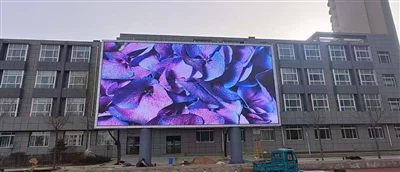
When selecting a control card and video processor for a P4 outdoor LED display, it is crucial to conduct a comprehensive evaluation across four dimensions: hardware compatibility, alignment with display requirements, system stability, and scalability. The following provides a detailed analysis from the perspectives of technical parameters, interface compatibility, functional requirements, and system coordination.
I. Control Card Selection: Core Driving and Signal Adaptation
1. Basic Parameter Matching
Scanning Mode and Driving Capability: P4 modules utilize a 1/8 scanning constant current drive, necessitating the selection of a control card that supports 8-scan or higher scanning modes. Choosing a control card that only supports 1/4 or 1/16 scanning may result in display abnormalities, such as uneven brightness or flickering.
Pixel Load Calculation: For a standard 16:9 aspect ratio P4 display with a resolution of 1920×1080, the total pixel count is 2,073,600 points. It is advisable to select a control card with a single-card load capacity of at least 2 million pixels to avoid increasing system complexity through multi-card cascading.
Grayscale and Refresh Rate: Outdoor scenarios require support for 16,384 levels of grayscale and a refresh rate of at least 3,840Hz to ensure natural color transitions at low brightness levels and eliminate flickering during filming.
2. Interface and Connection Methods
Signal Input Interfaces: Priority should be given to control cards that support HDMI 2.0, DP 1.4, and SDI interfaces to accommodate 4K@60Hz signal inputs. For connecting multiple signal sources (e.g., computers, cameras), models with four or more input interfaces are necessary.
Transmission Protocols: When utilizing TCP/IP network port transmission, it is crucial to confirm that the control card supports Gigabit Ethernet and features breakpoint resume functionality to prevent signal loss during long-distance transmission.
Wireless Expansion: For remote control requirements, control cards supporting Wi-Fi 6 or 4G/5G modules can be selected, although the signal stability in outdoor environments must be evaluated.
3. Synchronous and Asynchronous Mode Selection
Synchronous Control Cards: Suitable for scenarios with high real-time requirements (e.g., stage performances, sports events), these cards require real-time communication with a computer, with a delay of no more than 50ms.
Asynchronous Control Cards: Ideal for fixed content playback (e.g., advertising screens, information displays), these cards support program import via USB drives and can operate independently of a computer. It is necessary to confirm storage capacity (e.g., at least 32GB) and program format compatibility (e.g., MP4, JPG, TXT).
4. Software Compatibility and Debugging
Control Software Features: Choose software that supports functions such as brightness/color temperature adjustment, multi-picture division, subtitle overlay, and scheduled power on/off. It is important to confirm that the software interface supports Chinese and features one-click debugging for simplified operation.
Secondary Development Support: If integration with third-party systems (e.g., security monitoring, data visualization) is required, select models that provide SDK development kits and confirm the openness of API interfaces.
II. Video Processor Selection: Signal Processing and Display Optimization
1. Input Signal Processing Capability
Multi-Signal Source Switching: Select processors that support four or more signal inputs (e.g., HDMI×2, DVI×1, DP×1) and feature seamless switching functionality with a switching delay of no more than 100ms.
Resolution Adaptation: The processor must support automatic adaptation of input resolutions ranging from 640×480 to 4K@60Hz and feature scaling and cropping functions to match the output requirements of different signal sources.
Format Conversion: Confirm that the processor supports H.264/H.265 decoding, YUV/RGB color space conversion, and EDID simulation functions to resolve compatibility issues between signal sources and the display.
2. Output Load Capacity and Tiling
Single-Card Load Capacity: For a P4 display, if a single processor is required to drive a resolution of 1920×1080, select a model with an output bandwidth of at least 5Gbps and support for 4K@60Hz output.
Multi-Screen Tiling: For tiling multiple displays (e.g., a 2×2 array), choose processors that support four Gigabit Ethernet port outputs and feature picture synchronization functionality to ensure a tiling gap of no more than 0.5mm.
Irregular Screen Support: For displays with curved, cylindrical, or other irregular structures, select processors that support curvature correction and edge blending functions and confirm whether the software provides preset templates.
3. Picture Quality Enhancement Technologies
Low-Brightness High Grayscale: At brightness levels of no more than 100nits, ensure that the grayscale level is at least 1024 to avoid color discontinuities.
HDR Support: Choose processors that support HDR10 or HLG standards to enhance the reproduction of highlights and shadow details.
Dynamic Contrast: The processor must feature dynamic backlight adjustment functionality to automatically adjust brightness based on picture content, with a contrast ratio of at least 5000:1.
4. Environmental Adaptability Design
Temperature Range: Outdoor processors must support a working temperature range of -20℃ to 50℃ and feature either a cooling fan or natural cooling design.
Protection Level: Select models with an IP65 or higher protection level to prevent ingress of rainwater and dust.
Lightning Protection and Anti-Interference: The processor must feature power surge protection and signal surge protection functions and comply with EMC electromagnetic compatibility standards.
III. System Coordination and Scalability
1. Compatibility Between Control Cards and Processors
Protocol Matching: Confirm that the control card and processor support the same communication protocol (e.g., Art-Net, sACN) to avoid display abnormalities caused by incompatibility.
Cascading Support: If expanding the display scale is necessary, select processors that support master-slave cascading and confirm the maximum cascading quantity (e.g., no more than 16 units).
2. Backup and Redundancy Design
Dual Power Supply Backup: Choose processors that support dual power supply inputs for automatic switching to a backup power supply in the event of a primary power failure.
Signal Redundancy: For critical scenarios requiring high reliability (e.g., traffic command), select models that support dual-link transmission for automatic switching to a backup link in the event of a primary link failure.
3. Future Upgrade Potential
8K Compatibility: If future upgrades to 8K resolution are considered, select processors that support 8K input/output and confirm whether the bandwidth is at least 48Gbps.
AI Function Expansion: Some high-end processors support AI picture quality enhancement and facial recognition functions, and interfaces can be reserved according to specific needs.
Why Choose Us as Your Trusted LED Display Partner?
With 15+ years of manufacturing experience, we are a leading LED display producer serving 60+ countries worldwide. Our core strengths include:
✅ OEM/ODM Support – Customized solutions tailored to your specific needs
✅ Certified Quality – All products meet international standards (CE, RoHS, ISO certified)
✅ Cost-Effective Production – Competitive pricing without compromising quality
✅ Global Logistics Network – Reliable shipping to all major markets
✅ R&D Innovation – Cutting-edge LED technology for superior performance
We specialize in indoor/outdoor LED screens, rental displays, and creative installations. From small batches to bulk orders, our flexible manufacturing capacity ensures timely delivery.
Let's build brilliant visual solutions together! Contact us today for a quote.
📱 WeChat: 86 18676738905
📧 Email: Ledhll88@163.Com
🌐 Website: Www.Hll-Ledscreens.Com
Send Inquiry