


Rainproof & Dustproof: A Guide to Effective Outdoor LED Screen Maintenance
Oct 13, 2025
Leave a message
Rainproof & Dustproof: A Guide to Effective Outdoor LED Screen Maintenance
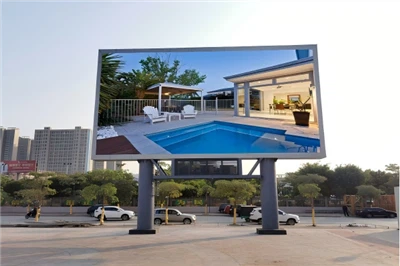
Outdoor LED Display: A Core Carrier of Modern Information Dissemination-Its Stable Operation Directly Affects the Efficiency of Commercial Displays, Public Information Releases, and Other Scenarios. However, when exposed to complex climatic environments for long periods, issues such as rainwater erosion and dust accumulation can easily lead to performance degradation or even malfunctions of the equipment. This article systematically elaborates on the scientific maintenance methods for outdoor LED displays from the two core needs of rain prevention and dust prevention, combined with equipment operation rules and environmental management requirements.
I. Rain Prevention Maintenance: Building a Multi-Level Protection System
1. Construction of Physical Barriers
The waterproof enclosure and cover serve as the first line of defense against rainwater intrusion. It is necessary to select an enclosure with an IP65 or higher protection rating to ensure that it can simultaneously block solid particles with a diameter greater than 1.0 mm and low-pressure water jets. During installation, attention should be paid to the integrity of the sealing rubber strips. Especially at the joints of the display body, silicone sealant should be used to fill gaps of 0.5 - 1 mm to prevent rainwater from permeating through capillary action.
The inclined installation design can effectively avoid water accumulation. It is recommended to maintain a tilt angle of 5° - 10° between the display body and the horizontal plane to allow rainwater to naturally slide off. For displays installed at the bottom, a drainage trough should be set at the bottom of the structure. The trough width should be no less than 50 mm, and the depth should exceed 30 mm to ensure that it can drain more than 500 L of water per hour.
The configuration of a rain shelter is suitable for installation scenarios without natural shelter. The rain shelter should be made of galvanized steel plates or sunshine boards. The overhanging length should exceed the edge of the display body by more than 500 mm, and the slope should be no less than 15° to ensure that rainwater will not flow back into the display body due to wind.
2. Protection of Electrical Systems
Lightning protection devices are crucial for ensuring equipment safety. A lightning rod that complies with the GB50057 standard needs to be installed. The height of the lightning rod should exceed the top of the display body by more than 1.5 m, and the grounding resistance should be controlled below 4 Ω. Before the thunderstorm season each year, a grounding resistance tester should be used for detection. If the resistance value exceeds the standard, the grounding electrode should be replaced in a timely manner.
The protection of the power system requires a dual-circuit power supply design. The switching time between the main power supply and the backup power supply should be less than 0.15 seconds. The distribution box should be equipped with a Class C lightning protection module, and the surge protector (SPD) should have a current-carrying capacity of more than 40 kA. In strong thunderstorm weather, the power supply of the display body should be automatically cut off through a remote control system to prevent induced lightning from invading the equipment through the lines.
The optimization of the sealing process should focus on the connector parts. When using waterproof connectors, ensure that the thread engagement depth exceeds 8 mm and apply waterproof sealant. For signal transmission lines, shielded twisted-pair wires should be used, and the outer layer should be wrapped with a waterproof sleeve. The bending radius of the cables should be maintained at more than 6 times the outer diameter to avoid sealing failure due to stress.
3. Emergency Response Mechanisms
A standardized process should be established for dealing with water ingress. After discovering water ingress, the main power supply should be cut off within 10 minutes, and the surface moisture should be wiped off with a highly absorbent lint-free cloth. For internal water ingress, the display body should be disassembled, and the circuit board should be dried using a hot air gun (with the temperature controlled between 50°C and 60°C) for no less than 2 hours. After drying, use a multimeter to detect the insulation resistance, which should be greater than 50 MΩ before reconnecting the power.
A graded response plan should be formulated for thunderstorm warnings. When the meteorological department issues an orange thunderstorm warning, the display body should be powered off 2 hours in advance and covered with a waterproof tarpaulin. After the warning is lifted, check whether the sealing rubber strips are deformed and whether the drainage system is unobstructed. Only after confirmation can the display be put back into use.
II. Dust Prevention Maintenance: Establishing a Full-Cycle Cleaning System
1. Daily Cleaning Management
Surface dust removal should adopt a graded cleaning method. For floating dust accumulation, a microfiber cloth (with a basis weight of no less than 200 g/m²) can be used to wipe in the same direction to avoid generating static electricity. For stubborn stains, a special cleaning solution (with a pH value of 6.5 - 7.5) should be used. After spraying, let it stand for 3 minutes, then gently brush it with a soft-bristled brush, and finally absorb the residual liquid with a dry cloth. The cleaning frequency should be adjusted according to the environmental grade, twice a month in industrial pollution areas and once a month in urban central areas.
Internal dust removal requires the use of professional equipment. For display bodies with a lower protection rating, an industrial vacuum cleaner (with a filtration accuracy of 0.3 μm) should be used to clean the dust in the ventilation openings every quarter. For display bodies with a modular design, they can be disassembled, and compressed air (with a pressure of 0.4 MPa) can be used to blow dust out of the gaps in the heat sinks. The blowing distance should be kept above 10 cm to prevent component displacement.
2. Optimization of Structural Protection
The configuration of dust screens is crucial for preventing the invasion of particulate matter. A stainless steel dust screen (with a mesh number of no less than 80) should be installed at the air inlet. It should be soaked and cleaned with a neutral detergent every 3 months and then dried at 50°C for 2 hours. For the air outlet, a one-way valve structure should be installed to prevent external dust from flowing back.
Regular sealing inspections should be carried out. Use a smoke generator to conduct an airtightness test on the display body. If smoke is found to leak from the gaps, reapply the sealant. For the joints of the enclosure, use a 0.1 mm feeler gauge for detection, and the insertion depth should not exceed 5 mm.
3. Environmental Control Strategies
Temperature and humidity regulation should maintain a dynamic balance. The operating environment temperature of the display body should be controlled between 0°C and 40°C, and the humidity should not exceed 70%. During the rainy season, a dehumidifier should be equipped to control the relative humidity below 50%. In high-temperature areas, an axial fan (with an air volume of no less than 2000 m³/h) should be installed to enhance heat dissipation and ensure that the module temperature does not exceed 65°C.
The maintenance of the ventilation system should focus on the condition of the filters. The primary filter should be cleaned every week, and the medium-efficiency filter should be replaced every month. For display bodies with a liquid cooling system, the concentration of the cooling liquid should be detected every six months, and it should be supplemented in a timely manner if the concentration deviation exceeds 5%.
III. Comprehensive Maintenance Specifications
1. Standardization of Operating Procedures
The start-up and shutdown sequence should strictly follow the principle of "control first, then display." When starting up, first turn on the control computer and wait for the system to complete the self-check (usually taking 30 seconds) before turning on the power supply of the display body. When shutting down, first turn off the display body, wait for the indicator light to go out (usually taking 1 minute), and then turn off the computer. Frequent start-ups and shutdowns (with an interval of less than 5 minutes) can cause overheating of the power module, so such operations should be avoided.
The management of screen display should control the brightness load. The continuous display time of a full-white screen should not exceed 2 hours. It is recommended to use dynamic screen rotation, with the display time of each single screen not exceeding 15 minutes. When used at night, the brightness should be reduced to below 30% to not only extend the lifespan of the light beads but also reduce light pollution.
2. Periodization of Inspection and Maintenance
Monthly inspection items include: the stability of the output voltage of the power module (with a fluctuation range of ±2%), the signal transmission delay (not exceeding 10 ms), and the temperature uniformity of the modules (with a temperature difference of ≤5°C). For modules with abnormal detection results, use a thermal imager to locate the fault points and replace the components with excessive temperatures in a timely manner.
Quarterly maintenance content includes: torque detection of the fasteners on the steel structure, grounding resistance testing of the lightning protection belt (with a resistance value of ≤4 Ω), and firmware upgrades of the control card. For display bodies that have been used for more than 3 years, optical parameter detection should be carried out, and color correction should be performed if the chromaticity coordinate deviation exceeds 0.02.
3. Scientific Management of Spare Parts
A dynamic list should be established for the storage of key spare parts. More than 2 sets of spare parts such as power modules, receiving cards, and light strips should be kept in stock. The storage environment temperature should be controlled between 20°C and 25°C, and the humidity should not exceed 60%. For spare parts of discontinued models, communication with the manufacturer for storage plans should be initiated 1 year in advance.
An electronic management system should be adopted for the traceability of maintenance records. Each maintenance should record the fault phenomenon, treatment measures, replaced components, and other information, and generate a unique maintenance code. Through data analysis, the lifespan of components can be predicted 3 - 6 months in advance to achieve preventive maintenance.
Why Choose Us as Your Trusted LED Display Partner?
With 15+ years of manufacturing experience, we are a leading LED display producer serving 60+ countries worldwide. Our core strengths include:
✅ OEM/ODM Support – Customized solutions tailored to your specific needs
✅ Certified Quality – All products meet international standards (CE, RoHS, ISO certified)
✅ Cost-Effective Production – Competitive pricing without compromising quality
✅ Global Logistics Network – Reliable shipping to all major markets
✅ R&D Innovation – Cutting-edge LED technology for superior performance
We specialize in indoor/outdoor LED screens, rental displays, and creative installations. From small batches to bulk orders, our flexible manufacturing capacity ensures timely delivery.
Let's build brilliant visual solutions together! Contact us today for a quote.
📱 WeChat: 86 18676738905
📧 Email: Ledhll88@163.Com
🌐 Website: Www.Hll-Ledscreens.Com
Send Inquiry