


Analysis of LED displays
Oct 10, 2024
Leave a message
Analysis of LED displays
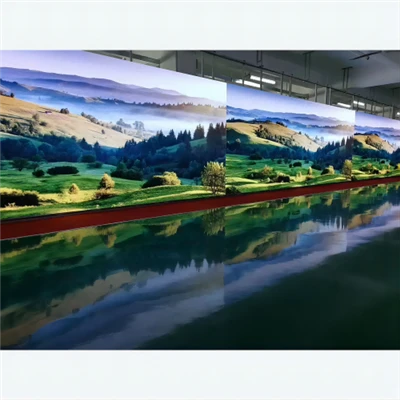
Pixel pitch of LED display
The pixel pitch of LED display is mainly as follows:
Less than or equal to P1: The pixel pitch is 1 mm, suitable for indoor high-definition display, with extremely high pixel density and delicate picture, and is generally used for close-up viewing occasions, such as conference rooms, TV stations, command centers, etc.
P1.25: With a pixel pitch of 1.25 mm, it is suitable for close-up viewing, requires high resolution and delicate picture effects, and is often used in indoor applications.
P1.5: With a pixel pitch of 1.5 mm, it is suitable for close-up viewing, requires high resolution and good display effect, and is often used in indoor applications.
P1.8: With a pixel pitch of 1.8 mm, it is suitable for near to medium distance viewing, requires high resolution and clarity, and is commonly used in indoor applications and outdoor semi-shaded applications.
P2: The pixel pitch is 2 mm, which is suitable for indoor places, such as shopping malls, hotels, etc., and can achieve high-definition effects.
P3: The pixel pitch is 3 mm, which is widely used in indoor venues, shopping malls, etc., with better display effect and relatively low price.
P4: The pixel pitch is 4mm, suitable for indoor and semi-outdoor environments, such as commercials, stations, etc., with better visual effects and image delicacy.
P5: With a pixel pitch of 5 mm, it is suitable for indoor and semi-outdoor environments, such as shopping malls, stadiums, etc., with high brightness and wide viewing angles.
Greater than or equal to P6: The pixel pitch is 6 mm, which is suitable for indoor and outdoor complex environments, and has good protection performance and durability.
Application scenarios of LED displays
The application scenarios of LED display are very wide, mainly including the following aspects:
Commercials: LED displays can be used to broadcast advertisements, promotional information, etc., with high brightness, high definition, bright colors and other characteristics, which can attract the attention of a large number of audiences and improve the publicity effect.
Cultural entertainment: LED display can be used in stage backgrounds, concerts, concerts and other cultural entertainment activities to create a unique atmosphere and visual effects to enhance the audience's viewing experience.
Sports events: LED displays can be used in stadiums to display real-time game information, timing and scoring, wonderful replay and other functions, providing spectators with a more convenient and accurate viewing experience.
Transportation: LED displays can be used in stations, airports, docks and other transportation places to provide real-time traffic information, indication signs, advertising and other functions to facilitate passengers' travel and understand relevant information.
News and information: LED display can be used to display public information such as news information, weather forecast, traffic information, etc., to facilitate the life of citizens and access to information.
Financial industry: LED display can be used in banks, securities companies and other financial institutions to display financial quotes, transaction information, advertising and other functions to provide customers with more timely and accurate services.
Government agencies: LED displays can be used in government agencies to issue government announcements, policies and regulations and other information to improve the transparency and credibility of government work.
Education industry: LED display can be used in schools, training institutions and other educational places for teaching demonstration, examination monitoring, information release and other functions to improve the quality and efficiency of education and teaching.
The development trend of LED display
The development trend of LED display is mainly reflected in the following aspects:
High resolution and full color: With the advancement of technology, the resolution of LED display is getting higher and higher, and the color performance is becoming richer and richer. In the future, LED displays will achieve higher pixel density and wider color gamut coverage, bringing a more delicate and real visual experience to the audience.
Intelligent and interactive: The intelligence and interactivity of LED display is also the future development trend. Through built-in sensors, cameras and communication modules, LED displays can realize interaction with the audience and enhance the audience's sense of participation and experience.
Energy saving and environmental protection: LED display has the advantage of energy saving and environmental protection, and this advantage will be more prominent in the future. By adopting more efficient LED lamps and optimizing the power supply design, the energy efficiency of LED displays will be further improved, and their environmental performance will also be enhanced.
Thinness and foldability: In order to meet the needs of different occasions, LED displays are developing in the direction of thinness and foldability. This design can be easily installed and handled, while also improving the flexibility and adaptability of the LED display.
Internet of Things integration: With the development of Internet of Things technology, LED displays will be interconnected with other devices to form an intelligent Internet of Things system. This will make the LED display have stronger functions and higher efficiency in information release, data acquisition and automatic control.
Virtual Reality (VR) and Augmented Reality (AR) Technology Applications: The development of VR and AR technologies will further promote the application of LED displays. By combining with these technologies, LED displays will be able to present more immersive virtual scenes and augmented reality effects, bringing unprecedented visual experience to the audience.
Large screen and splicing: In order to meet the growing demand for large screens, LED displays are developing in the direction of larger screens. At the same time, through splicing technology, the splicing combination of multiple screens can be realized to meet the application of different occasions and different needs.
The development trend of LED display is to develop in the direction of higher resolution, full color, intelligence, interactivity, energy saving and environmental protection, thinness and foldability, Internet of Things integration, VR and AR technology applications, as well as large screens and splicing. These development trends will make LED displays widely used in more fields and become one of the important choices for information display in the future.
Installation points of LED display
The installation points of LED display include the following points:
Before installation, the size, installation position and direction of the screen should first be determined according to the size and structure of the room to be installed.
Determine the mounting surface of the LED display, which can be a wall, roof or floor. Depending on the mounting surface, different installation methods are required.
For outdoor LED displays, it is necessary to consider the waterproof, dustproof, high-temperature, and short-circuit proofs of the display to ensure the safe and reliable operation of the display. When installing, the joint between the frame of the display and the building needs to be strictly waterproof and leak-proof, and at the same time, it is also necessary to ensure that the screen body has good drainage measures.
During the installation process, the installation of lightning protection devices on the display screen and the building should be avoided to prevent strong electric and magnetic attacks caused by lightning.
When installing the power supply and control card, it is necessary to pay attention to the positive and negative poles of the power supply, and it is recommended to use SVV2*1.0 soft core cable, that is, 1 square double-strand soft core cable.
When connecting the cable and the upper and lower power cables, it is necessary to carry out the construction in strict accordance with the requirements of technical data such as design drawings.
When laying cables, foundations, steel structure frames, etc., it is necessary to have professional and technical personnel to issue corresponding construction drawings and carry out construction in accordance with the design drawings reviewed by relevant departments.
In the installation process, it is necessary to strictly ensure that the screen body and the joint part of the screen body and the building must be strictly waterproof and leak-proof; The screen body should have good drainage measures, and once the water accumulation occurs, it can be discharged smoothly.
The splicing part of the display screen needs to be spliced together with the cut profiles, and the common profiles on the market are mainly square and round, but the assembly method is the same.
Fixed panels require special attention to the front and back sides of the rack when placing the unit board on the rack, with one side of the slot being the front, and the placement of the mounting back strip must be fairly precise, otherwise it will be reinstalled.
Once the mounting strap is secured, the skeleton can be moved to begin mounting the magnet. After installation, close the magnet bracket and let the magnet and the back strip suction, and the work of fixing the unit board is complete.
Connect the cable and the upper and lower power cables.
The console is connected to the unit board cable.
The installation method of LED display
The installation methods of LED display are mainly as follows:
Wall mounting: Fix the LED display on the wall or other flat surfaces, suitable for smaller LED displays.
Embedded installation: The LED display is embedded in the building, integrated with the building, and is suitable for large LED displays.
Hoisting installation: The LED display is hoisted on the ceiling, which is suitable for large LED displays or places that need height adjustment.
Column installation: The LED display is installed on the column, which is suitable for roads, parking lots and other places.
Rooftop installation: The LED display is installed on the roof of the building, which is suitable for large LED displays or places that need to be viewed from a distance.
According to different places of use and needs, you can choose the appropriate installation method. When choosing the installation method, you need to consider the size, weight, structure and other factors of the display, as well as the load-bearing capacity and space size of the installation location.
Common Failures & Analysis
The common faults of LED display include a variety of manifestations, and the following are some fault phenomena and their possible causes analysis:
The display does not light up: It may be caused by a power supply problem, a signal transmission problem, or a problem with the LED display itself. It is necessary to check whether the power supply is normal, check whether the signal transmission line is unblocked, and check whether the LED display is working normally.
Insufficient display brightness: It may be caused by the power supply voltage is too low, the LED lamp beads are aging, or the drive circuit is faulty. It is necessary to check whether the power supply voltage is stable, check whether the LED lamp beads are aged or damaged, and check whether the driving circuit is faulty.
Improper display color: It may be caused by the aging of LED lamp beads or color mismatch. It is necessary to check whether the LED lamp beads are aged or damaged, and check whether the colors match.
Display flickering: It can be caused by unstable power supply voltage, signal transmission issues, or problems with the LED display itself. It is necessary to check whether the power supply voltage is stable, check whether the signal transmission line is unblocked, and check whether the LED display is working normally.
Bright lines or bands on the display: It may be caused by the aging of LED lamp beads or faulty cables. It is necessary to check whether the LED lamp beads are aged or damaged, and check whether the cable is faulty.
Abnormal display display: It may be caused by an error in the control card settings, a signal transmission problem, or a problem with the LED display itself. It is necessary to check whether the control card settings are correct, check whether the signal transmission line is unblocked, and check whether the LED display is working normally.
Send Inquiry