


How to choose the right power supply for a P5 LED display?
Dec 25, 2025
Leave a message
As a P5 LED display supplier, I understand the critical role that a power supply plays in the performance and longevity of these high - impact visual solutions. Selecting the right power supply for a P5 LED display is not a decision to be taken lightly, as it directly affects the display's brightness, color accuracy, and overall reliability. In this blog post, I'll share some key considerations to help you make an informed choice.
Understanding the Basics of P5 LED Displays
Before delving into power supply selection, it's essential to understand what a P5 LED display is. The "P5" refers to the pixel pitch, which is the distance between the centers of two adjacent pixels, measured in millimeters. A P5 LED display has a pixel pitch of 5mm, offering a relatively high - resolution image suitable for both indoor and outdoor applications. These displays are commonly used in advertising, events, and information dissemination due to their sharp visuals and vibrant colors.
Power Requirements of P5 LED Displays
The power requirements of a P5 LED display depend on several factors, including the display's size, brightness level, and the number of LEDs per square meter. Generally, P5 LED displays operate at a low voltage, typically around 5V. However, the total power consumption can vary significantly based on the display's specifications.
To calculate the approximate power consumption of a P5 LED display, you need to know the power consumption per square meter and the total area of the display. For example, if a P5 LED display consumes 400W per square meter and you have a 10 - square - meter display, the total power consumption would be 4000W. It's important to note that this is a rough estimate, and actual power consumption may vary depending on the display's usage and environmental conditions.
Types of Power Supplies for P5 LED Displays
There are two main types of power supplies commonly used for P5 LED displays: switching power supplies and linear power supplies.
Switching Power Supplies
Switching power supplies are the most popular choice for P5 LED displays due to their high efficiency, compact size, and wide input voltage range. These power supplies work by converting the input AC voltage to a high - frequency DC voltage, which is then regulated to the desired output voltage. Switching power supplies can achieve efficiency levels of up to 90%, which means less energy is wasted as heat. This not only reduces operating costs but also extends the lifespan of the power supply and the LED display.
Linear Power Supplies
Linear power supplies, on the other hand, are less efficient and bulkier than switching power supplies. They work by using a transformer to step down the input AC voltage and a linear regulator to maintain a constant output voltage. Linear power supplies are typically used in applications where low noise and high precision are required. However, for P5 LED displays, switching power supplies are generally preferred due to their better efficiency and performance.
Key Considerations When Choosing a Power Supply
Power Output
The most important factor to consider when choosing a power supply for a P5 LED display is its power output. The power supply should be able to provide enough power to meet the display's requirements under all operating conditions. It's recommended to choose a power supply with a slightly higher power output than the calculated power consumption of the display to account for any power surges or fluctuations.
Efficiency
As mentioned earlier, the efficiency of a power supply is crucial for reducing energy consumption and operating costs. Look for a power supply with an efficiency rating of at least 85%. Higher - efficiency power supplies not only save energy but also generate less heat, which can help extend the lifespan of the power supply and the LED display.

Input Voltage Range
The input voltage range of a power supply determines the range of AC voltages it can accept. For P5 LED displays used in different regions, it's important to choose a power supply with a wide input voltage range, typically from 100V to 240V. This ensures that the power supply can operate safely and efficiently in various electrical environments.
Protection Features
A good power supply should have several protection features to safeguard the LED display from damage. These features may include over - voltage protection, under - voltage protection, over - current protection, and short - circuit protection. Over - voltage protection prevents the power supply from delivering a voltage higher than the rated voltage, which can damage the LEDs. Under - voltage protection ensures that the power supply shuts down if the input voltage drops below a certain level. Over - current protection limits the current flowing through the power supply to prevent overheating, and short - circuit protection disconnects the power supply in case of a short circuit.
Reliability and Lifespan
The reliability and lifespan of a power supply are important considerations, especially for P5 LED displays used in commercial applications. Look for a power supply from a reputable manufacturer with a proven track record of reliability. Check the manufacturer's specifications for the power supply's mean time between failures (MTBF), which indicates the average time the power supply can operate without failing. A higher MTBF value means a more reliable power supply.
Compatibility with P5 LED Displays
When choosing a power supply, it's essential to ensure that it is compatible with the P5 LED display. This includes checking the output voltage, current, and connector type. The output voltage of the power supply should match the operating voltage of the LED display, typically 5V. The current rating of the power supply should be sufficient to meet the display's power requirements. Additionally, the connector type of the power supply should be compatible with the LED display's power input connector.
Real - World Applications and Examples
Let's take a look at some real - world applications of P5 LED displays and the power supplies used in them.
Outdoor Advertising
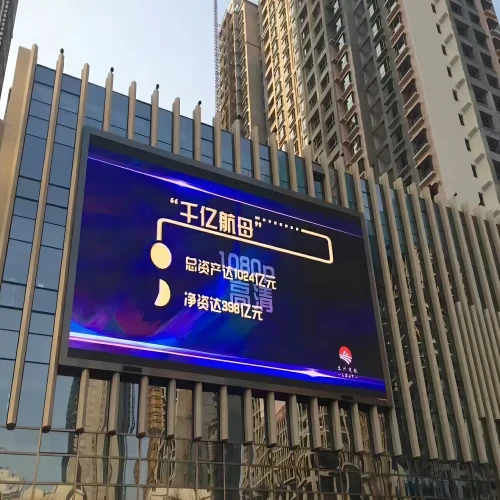
For outdoor advertising, P5 LED displays are often used to attract attention and convey messages. These displays require a power supply that can withstand harsh environmental conditions, such as high temperatures, humidity, and dust. A high - efficiency switching power supply with a wide input voltage range and robust protection features is ideal for this application. For example, our Outdoor Advertising Display Screen P3 and P5 Outdoor Led Screen Display are designed to work with reliable power supplies that ensure optimal performance in outdoor settings.
Indoor Events
In indoor events, such as conferences, concerts, and trade shows, P5 LED displays are used to create immersive visual experiences. These displays may require a power supply with low noise and high precision to ensure smooth operation. A linear power supply may be suitable for some indoor applications, but switching power supplies are still the most common choice due to their efficiency and compact size. Our Outdoor Front Service 960*960mm P6.67 Led Video Display can also be customized for indoor use with the appropriate power supply.
Conclusion
Choosing the right power supply for a P5 LED display is a critical decision that can significantly impact the display's performance, energy consumption, and lifespan. By considering factors such as power output, efficiency, input voltage range, protection features, reliability, and compatibility, you can select a power supply that meets the specific requirements of your P5 LED display.
If you're in the market for a P5 LED display or need help choosing the right power supply, we're here to assist you. Our team of experts can provide you with detailed information and guidance to ensure that you make the best choice for your application. Contact us today to start the procurement and negotiation process.
References
- LED Display Technology Handbook
- Power Supply Design and Application Guide
- Industry Reports on LED Display Power Supplies
Send Inquiry