Q: What are the application areas of LED display?
A: At present, LED display products have only entered the Chinese market for more than 20 years, but the market has a good response, reflecting the huge demand. The wide demand for LED display is mainly due to its high-definition color display screen, super three-dimensional sense, quiet as oil painting and dynamic film characteristics, and its advantages that can be widely combined with smart devices to quickly occupy some areas of production and life, and began to launch an offensive to more fields. So, what areas are LED displays being used in? In what areas will it develop in the future? Take a look at the following inventory:
First, light boxes, etc., have become a new force in the advertising and media industry. Traditional advertising can only play pictures, and LED display screens combine pictures, videos, text, and sounds perfectly, and have high definition, high brightness, bright colors, vivid subjects, novel design, vivid images, prominent advertising images, easy to attract the attention of pedestrians, easy to remember. Moreover, the LED display advertising is released for a long time, with high frequency and more information, which can produce greater advertising benefits. Advertising media led display main application field all bustling streets, shopping malls, square parks, buildings, landmark buildings, stations and airports.
Second, the field of entertainment and culture. The most widely used is the stage performance, concert and other background LED large screen, it can be live broadcast and wonderful playback, breaking the seat limit, the application of all the evening concerts, event sites, theater theaters, TELEVISION stations, hotels, auditoriums, high-end entertainment venues and so on.
The field of sports. I believe that the led display screen of the main venues of the 2008 Beijing Olympic Games has left a deep impression on everyone, and the role of the led big screen of the stadium is to play the wonderful picture of the stadium, the playback of slow motion, the display of specific shots, the game score information and the introduction of athletes, and the broadcast of commercial advertisements. Among them, slow-motion playback has become the basis for the referee to make a correct ruling, so that the audience feels that the game is fair and impartial, reducing unnecessary conflicts. The main application fields are all football field LED fence screens, basketball hall LED funnel screens, swimming pool athletics hall LED timing and scoring screens, as well as various sports venues wall or column LED display.
Fourth, the field of traffic guidance. In the bustling street intersection or on both sides of the highway, there will be established traffic guidance LED display, these displays are generally controlled by the control center, combined with other road condition monitoring equipment, automatically according to the road conditions to display the road conditions or congestion information, for the traveler to choose the best route to make a reference. It also has the function of showing weather conditions, traffic regulations, etc., reminding drivers to drive safely, and has the role of a signpost. The main application field is all major urban arterial roads, dense road sections, highways and other places.
Fifth, the special place for creative LED display. Now basically every city has museums, science and technology museums and other places, and high-tech products LED display has a close connection. For example, the globe of the Science and Technology Museum will use a spherical LED display, which can not only dynamically display the earth's landform, but also demonstrate the evolutionary history of the earth, which can not only play a good educational role, but also play a decorative effect. At present, all the led creative screen application fields of the museum LED spherical screen, the SCIENCE and Technology Museum LED spiral and LED Cube, the Children's Palace LED creative screen, the Space City LED drum screen, as well as art museums, art galleries, experience halls and other places.
Q: What is the difference between LED engine and LED module?
A: LED light engines often include LED modules. LED light engines function as an integrated assembly of one or more LED diodes, modules, or arrays. They contain optical, mechanical, electrical, and thermal components, including an appropriate heat sink to protect the light engine from overheating.
Q: What does an LED module look like?
A: Instead of the traditionally shaped bulb, LED light modules consist of one or more light emitting diode arranged on a board. These boards can come in circular, rectangular, linear, square, or star shapes.
Q: Can LED modules be replaced?
A: In such cases, you can usually remove and replace the LED module, extending the life of the fixture. However, it's essential to check the manufacturer's instructions for your specific fixture, as not all integrated LED fixtures have replaceable components.
Q: What is LED display module?
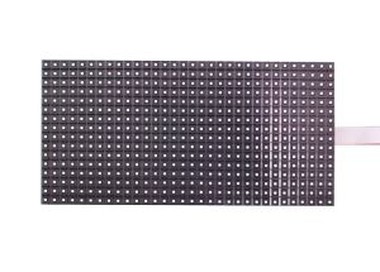
A: LED display module is one of the basic components of LED display screen. It is an independent module composed of a series of LED lamp beads, circuit boards and connectors, with specific sizes and functions.
Q: How long do LED modules last?
A: Like integrated LED, LED modules last 40,000 hours to 50,000 hours on average. ClickFit spotlights are specially made for LED modules. These spotlights have a click system that allows the LED module to be held in place, without the help of a fitting.
Q: What is LED strip vs LED module?
A: LED Strips may not boast the same level of environmental resistance as modules, but they shine in the maintenance department. Generally less robust than their module counterparts, strips can be easier to repair or replace when needed.
Q: Can regular LED lights be used outdoors?
A: As you already know, LED light bulbs can be used outside the home, in places such as garden, patio, balcony, driveway, or garage. What's more, not only private individuals use LED bulbs outdoors. Business owners also make the best of this type of lights outside their office buildings and industrial plants.
Q: Do you need special LED lights for outside?
A: Exterior LED lights have safety requirements indicating that they're safe for outdoor use. Knowing more about these rating requirements can help you choose the right lighting for your home exterior. When you look at outdoor LED lights, you should see one of the following ratings: UL (Underwriters Laboratories) Listed.
Q: Are outdoor LED screens waterproof?
A: It can be seen that the waterproof level of outdoor LED displays is generally higher than that of indoor LED displays. This is because outdoor waterproof LED screens are more likely to encounter rainy days than indoor displays.
Q: Are outdoor LED lights worth it?
A: The advantages of switching to LED outdoor lighting extend far beyond energy efficiency. Over time, the initial investment in LED technology pays off through significant reductions in your electricity bills. LEDs' long lifespan means fewer replacements, saving you both time and money in maintenance.
Q: How long do outdoor LEDs last?
A: On average, LED light bulbs can last up to 50,000 hours. To put this into perspective, that's more than five years of continuous use — assuming that the lights are on 24 hours a day. If the lights are used for 8 hours a day, the lifespan of the LED can be extended to over 17 years.
Q: Do outdoor LED lights get hot?
A: While other light bulbs can get extremely hot when you turn them on, LED lights usually only get slightly warm, if at all (they may even feel cold to the touch). It is because LEDs use less energy than other bulbs, which means they don't waste as much energy producing unnecessary heat.