


Waterproof LED Screens: How to Protect Your Outdoor Display
Aug 07, 2025
Leave a message
Waterproof LED Screens: How to Protect Your Outdoor Display
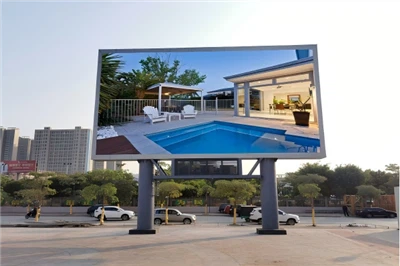
Outdoor LED displays, as vital carriers for modern commercial promotion and information presentation, are widely applied in scenarios such as city squares, transportation hubs, and commercial districts. However, being constantly exposed to the outdoor environment, they have to confront multiple challenges including rain, humidity, dust, and lightning. Inadequate protective measures may lead to circuit short - circuits, LED lamp damage, degraded display performance, and even safety accidents. This article will systematically elaborate on protective strategies for waterproof LED displays from four dimensions: structural design, installation specifications, routine maintenance, and environmental management, providing users with scientific and actionable solutions.
I. Structural Design: Building a Waterproof Barrier from the Source
Modular Waterproof Packaging Technology
The core of an outdoor LED display's waterproof performance lies in the packaging process of the LED lamps and circuit boards. Traditional SMD (Surface Mount Device) packaging, with exposed lamp pins, is susceptible to moisture erosion. In contrast, COB (Chip on Board) technology integrates multiple LED chips directly onto a substrate, forming a pin - less planar structure that physically blocks moisture penetration. For instance, displays employing full - flip COB packaging fix LED lamps to the substrate via eutectic bonding, fully encapsulating solder joints with resin. Coupled with nano - optical coating technology, a dense protective layer can be formed on the lamp surface, achieving an IP65 rating for dust and water resistance (complete protection against dust ingress and resistance to low - pressure water jet spray).
Three - Proof Treated Power System
As the "heart" of the display, the power supply's waterproof and moisture - proof capabilities directly impact overall stability. It is advisable to choose power modules that have received three - proof treatment (moisture - proof, mold - proof, and anti - fogging). The internal circuit boards of these modules are coated with a conformal coating, creating a transparent protective film 0.1 - 0.3mm thick on component surfaces, which can withstand condensation in environments with up to 85% humidity. Additionally, the power supply housing should be made of flame - retardant PC+ABS alloy material and equipped with silicone seals to ensure that the connector waterproof rating reaches IP67 (resistant to temporary immersion in water).
Structural Waterproof Design
Display cabinets should adopt a "double - seal + pressure equalization" structure: an inner layer uses waterproof gaskets to seal gaps between modules and the cabinet, while an outer layer provides secondary protection through a metal backplate and a waterproof cover. The cabinet top should feature a 3% sloped drainage channel, with drainage holes at the bottom fitted with one - way valves to prevent rainwater backflow. Cabinets should be connected using quick - lock fasteners, with conductive gaskets providing both electromagnetic shielding and waterproofing. Furthermore, for coastal areas with high salt spray, cabinet surfaces should undergo anodic oxidation treatment to form a 10μm thick oxide film, effectively resisting chloride ion corrosion.
II. Installation Specifications: Creating a Comprehensive Protective System
Foundation Engineering Waterproofing
The display should be installed at least 1.5 meters above ground level to avoid water accumulation. For installations on rooftops or open platforms, a C30 concrete foundation should be poured, with embedded galvanized steel pipes serving as grounding electrodes to ensure a grounding resistance of ≤4Ω. The foundation surface should be covered with a 50mm thick asphalt waterproof layer, extending 300mm outward to form a flashing slope, preventing groundwater infiltration.
Protective Covering Collaboration
A galvanized steel sheet or sunboard canopy should be installed 2 - 3 meters above the display, with a width extending at least 500mm beyond the display edges and a slope of no less than 15° to ensure rapid rainwater drainage. For scenarios where a fixed canopy cannot be erected, a retractable waterproof shelter can be used. Its frame should be constructed from aluminum alloy profiles, with a canopy made of PVC - coated polyester fiber cloth (tensile strength ≥4000N/5cm) and equipped with an electric push rod for automatic opening and closing.
Cable Waterproofing
Power and signal cables should be outdoor - specific waterproof cables, with outer sheaths made of polyvinyl chloride (PVC) or cross - linked polyethylene (XLPE) materials, capable of withstanding temperatures ranging from - 40°C to +90°C. Cable connectors should use IP68 - rated waterproof connectors, filled with silicone grease and fitted with heat - shrink tubing to ensure connection point sealing. For long - distance cabling, cables should be laid in galvanized steel pipes or PVC pipes buried at a depth of ≥700mm, with waterproof glue applied at pipe joints.
Lightning Protection and Grounding System
Displays should adopt a "three - in - one" grounding method (shared grounding electrode for working, protective, and lightning protection grounding). The grounding electrode should consist of 50mm×5mm galvanized flat steel, buried at a depth of ≥2.5 meters and surrounded by grounding resistance reducer. An early streamer emission lightning rod should be installed atop the display, with a protection radius ≥1.5 times the display's diagonal length. A three - stage lightning protection module (with a nominal discharge current ≥20kA) should be installed at the power input, and signal surge protectors should be added to signal lines to ensure safe operation during thunderstorms.
III. Routine Maintenance: The Key to Extending Service Life
Regular Cleaning and Dust Removal
It is recommended to perform cleaning and maintenance on the display every two weeks, using a vacuum cleaner (equipped with a soft brush attachment) to remove surface dust, avoiding direct wiping with a damp cloth. For stubborn stains, a super - fine fiber cloth dampened with anhydrous ethanol (concentration ≥99.7%) can be used for gentle wiping. The use of organic solvents such as gasoline or acetone is prohibited. Cleaning should be performed with the power off and after the display has cooled to room temperature to prevent sealant cracking due to thermal expansion and contraction.
Seal Inspection and Repair
Professional testing equipment (such as an air tightness tester) should be used to conduct quarterly seal inspections on the display, focusing on areas such as module gaps, cable connectors, and drainage holes. If aging or cracking of the sealant is detected, the old sealant should be promptly removed and reapplied with new neutral silicone waterproof sealant (with a Shore hardness ≥40 after curing). For blocked drainage holes, a high - pressure air gun (pressure ≤0.5MPa) can be used for unclogging, avoiding the use of sharp tools that may damage the cabinet.
Humidity and Temperature Management
The relative humidity of the display's operating environment should be controlled between 30% - 70%, with real - time monitoring achieved through the installation of temperature and humidity sensors. During the rainy season, it is advisable to operate the display for at least 4 hours per week, utilizing the heat generated by the LED lamps to disperse internal moisture. If the environmental humidity consistently exceeds 85%, a dehumidifier (with a daily dehumidification capacity ≥50L) should be installed behind the display to reduce humidity to a safe level. Additionally, ensure that there is at least 500mm of ventilation space behind the display to prevent overheating due to poor air circulation (recommended operating temperature ≤55°C).
Power System Maintenance
Monthly checks should be conducted on the input/output voltage and current parameters of the power module to ensure they remain within ±5% of the rated values. The surface temperature of the power supply should be monitored using an infrared thermometer, with shutdown for inspection required if it exceeds 70°C. A semi - annual deep maintenance should be performed on the power supply, including cleaning dust from the cooling fan, checking electrolytic capacitor capacity (replacement required if degradation exceeds 20%), and tightening wiring terminals.
IV. Environmental Management: Building a Safe Operating Ecosystem
1.Emergency Plan for Severe Weather
Prior to the onset of extreme weather conditions such as heavy rain, typhoons, or thunderstorms, the following measures should be taken in advance:
Turn off the display power and disconnect the mains input.
Inspect the fixation of the canopy and waterproof shelter, reinforcing any loose components.
Clear the drainage system to ensure rapid rainwater discharge.
After the weather has passed, wait 24 hours and confirm the absence of electrical leakage risks before restarting the display.
2. Salt Spray Environment Protection
For displays in coastal areas or chemical industrial parks with high salt spray, the following protective measures should be implemented:
Spray three layers of fluorocarbon coating on the cabinet surface (total thickness ≥80μm), with a salt spray resistance duration ≥5000 hours.
Use conductive gaskets instead of traditional rubber seals between modules to prevent seal failure due to chloride ion corrosion.
Rinse the display surface with deionized water monthly to remove salt deposits.
3. Animal Infestation Prevention
For displays installed in wild or suburban areas, measures should be taken to prevent issues such as bird nesting and insect infestation:
Install bird spikes or ultrasonic bird repellers on top of the display.
Fit stainless steel insect screens (pore size ≤2mm) to cabinet ventilation openings.
Regularly inspect the interior of the cabinet to remove spider webs, ant nests, and other potential hazards.
Why Choose Us as Your Trusted LED Display Partner?
With 15+ years of manufacturing experience, we are a leading LED display producer serving 60+ countries worldwide. Our core strengths include:
✅ OEM/ODM Support – Customized solutions tailored to your specific needs
✅ Certified Quality – All products meet international standards (CE, RoHS, ISO certified)
✅ Cost-Effective Production – Competitive pricing without compromising quality
✅ Global Logistics Network – Reliable shipping to all major markets
✅ R&D Innovation – Cutting-edge LED technology for superior performance
We specialize in indoor/outdoor LED screens, rental displays, and creative installations. From small batches to bulk orders, our flexible manufacturing capacity ensures timely delivery.
Let's build brilliant visual solutions together! Contact us today for a quote.
📱 WeChat: 86 18676738905
📧 Email: Ledhll88@163.Com
🌐 Website: Www.Hll-Ledscreens.Com
Send Inquiry