


The Truth About LED Screen Lifespan: Lab Tests vs Real World
Jul 17, 2025
Leave a message
The Truth About LED Screen Lifespan: Lab Tests vs Real World
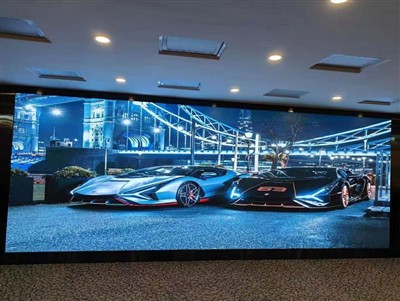
LED display screens, as core devices for modern information display, have always been a focal point of concern for both users and manufacturers regarding their lifespan. Theoretically, the labeled parameters of LED display screens often indicate an "Mean Time Between Failures (MTBF) ≥ 10,000 hours" and a "half - life lifespan ≥ 50,000 hours," with some products even claiming a theoretical lifespan of up to 100,000 hours. However, the actual lifespan in real - world scenarios is significantly shortened due to differences in environment, usage habits, and maintenance. This disparity between laboratory data and practical application scenarios reveals the complexity of evaluating the lifespan of LED display screens.
i.Laboratory Tests: Theoretical Deductions Under Ideal Conditions
Laboratory tests are the cornerstone of evaluating the lifespan of LED display screens, with the primary goal of simulating long - term use under controlled environments to deduce theoretical lifespan values. The main testing methods include the following:
MTBF (Mean Time Between Failures) Testing
MTBF testing calculates the average operational time between failures by statistically analyzing the failure times and frequencies of a large number of samples under constant conditions. For example, in one test, an LED display screen was continuously operated in a laboratory environment at 25°C and 50% humidity, with the failure rate recorded every 1,000 hours, ultimately yielding an MTBF of 60,000 hours. However, MTBF is essentially a theoretical estimate based on assumptions of an "ideal environment" and "single failure mode," without considering the combined effects of multiple factors in real - world use.
High and Low Temperature Alternation Tests
These tests simulate the impact of extreme temperature variations on display screens. For instance, a display screen was subjected to 100 cycles between - 20°C and 70°C to assess brightness degradation and structural stability. The results showed that high - quality display screens experienced no more than a 10% decrease in brightness under extreme temperatures, but prolonged temperature differentials could cause thermal expansion and contraction of encapsulation materials, accelerating the detachment of solder joints or LED chips.
Luminous Decay Curve Testing
Based on international standards, this testing involves continuously illuminating LED chips for an extended period and recording changes in luminous flux over time. For example, in one test, LED chips were run continuously for 6,000 hours at a junction temperature of 85°C, with luminous flux decreasing to 80% of the initial value. Based on this, the L70 lifespan (the time for brightness to degrade to 70%) was estimated at 50,000 hours. However, this testing has a structural flaw: the initial luminous flux in the laboratory is taken from values after thermal stabilization, whereas in actual use, the junction temperature of LEDs is 25°C when first turned on, resulting in a 20% higher luminous flux than after thermal stabilization. If the true initial value is used for calculation, the actual L70 lifespan may be shortened by 30%.
Vibration and Impact Tests
These tests simulate the external shocks encountered during transportation and installation to evaluate the mechanical stability of display screens. The results indicate that display screens using Chip - on - Board (COB) or Glue - on - Board (GOB) technologies exhibit superior anti - vibration performance compared to traditional Surface - Mount Device (SMD) packaging, reducing the risk of LED chip detachment by 60%.
Limitations of Laboratory Tests
Laboratory environments eliminate interfering factors by controlling variables such as constant temperature and humidity and low dust levels. However, in real - world use, display screens must contend with a combination of challenges including high temperatures, high humidity, ultraviolet radiation, and electromagnetic interference. For example, the surface temperature of outdoor display screens can reach 70°C in summer and drop to - 30°C in winter, far exceeding the range simulated in laboratories. Additionally, laboratory tests typically use new samples, whereas in actual use, display screens gradually age over time, leading to an exponential increase in failure rates.
II.Real - world Use: Complex Lifespan Degradation Due to Multiple Factors
The lifespan of LED display screens in real - world scenarios is influenced by three main factors: product quality, environmental conditions, and usage habits, resulting in a degradation mechanism far more complex than that in laboratories.
Product Factors: Chip Quality and Packaging Technology
Chip Quality: High - end chips, which utilize gold wire bonding and high - purity phosphors, exhibit significantly slower luminous decay compared to low - end chips. For example, LED chips from top - tier brands experience less than 50% brightness degradation over five years, whereas low - end products may exceed 50% degradation in just three years.
Packaging Technology: COB packaging, which directly bonds chips onto PCB boards, reduces the number of solder joints and offers greater stability than SMD packaging. GOB packaging, which isolates moisture and dust through a coating technology, extends the lifespan of outdoor display screens by 40%.
Power Supply and Drivers: Poor - quality power supplies can cause current fluctuations, accelerating the aging of LED chips. High - quality power supplies, with voltage fluctuations controlled within ±1%, can extend the lifespan of display screens by 30%.
Environmental Factors: Temperature, Humidity, and Corrosive Gases
Temperature: For every 10°C increase in LED junction temperature, the lifespan is shortened by approximately 30%. For example, the actual lifespan of outdoor display screens operating continuously under high summer temperatures may be less than 50% of the laboratory test value.
Humidity: When humidity exceeds 80%, moisture can penetrate the interior of display screens, causing short circuits or component corrosion. In coastal areas, due to salt spray corrosion, the lifespan of display screens is 2 - 3 years shorter than in inland regions.
Dust and Ultraviolet Radiation: Dust accumulation reduces heat dissipation efficiency, while ultraviolet radiation accelerates the yellowing of encapsulation materials. For example, display screens without ultraviolet protection may experience twice the brightness degradation compared to laboratory test values after three years.
Usage Habits: Operating Time and Brightness Control
Continuous Operating Time: Display screens used 24 hours a day (e.g., in command centers) have a shorter lifespan than those used intermittently (e.g., in conference rooms). The former may require replacement after 50,000 hours of continuous high - temperature operation, while the latter may remain stable for over 100,000 hours.
Brightness Settings: High - brightness modes accelerate luminous decay. For example, increasing the brightness from 800 cd/m² to 1200 cd/m² may shorten the lifespan by 40%.
Power - on/off Sequence: Turning on the control computer before the display screen power supply avoids current surges, while turning off the display screen before the computer reduces component wear. Incorrect operation may shorten the lifespan by 20%.
Maintenance: Cleaning and Component Replacement
Regular Cleaning: Dust accumulation can block heat dissipation vents, leading to increased internal temperatures. It is recommended to clean the display screen surface with a soft brush every quarter and perform deep dust removal annually.
Wiring Inspections: Loose or aged wiring can cause short circuits. Checking connections and interfaces every six months can reduce failure rates by 50%.
Software Updates: Outdated control software may cause display abnormalities or driver conflicts. Timely software updates can optimize display performance and extend hardware lifespan.
III.Disparity Between Laboratory and Real - world Lifespans: Data Comparison and Root Cause Analysis
The difference between laboratory test data and real - world lifespans can be quantified through the following example:
Theoretical Lifespan: An indoor display screen labeled with a half - life of 50,000 hours would have a theoretical lifespan of approximately 11 years based on 12 hours of daily use.
Actual Lifespan: In an environment with 16 hours of daily use, 70% humidity, and a 20°C temperature fluctuation, the lifespan may be shortened to 6 years; without regular maintenance, it could further decrease to 4 years.
Root Causes of the Disparity
Simplified Testing Conditions: Laboratories overlook long - term impacts such as dust and corrosive gases, which continuously erode display screens in real - world scenarios.
Single Failure Mode Focus: Laboratories typically concentrate on luminous decay of LED chips, whereas real - world failures include power supply damage, driver board faults, and wiring aging.
Sample Limitations: Laboratory tests involve a limited number of samples, making it difficult to cover all usage scenarios; in real - world use, quality variations may exist across different product batches.
Strategies to Extend Lifespan: Full - chain Optimization from Design to Maintenance
IV.Product - side: Enhance Core Component Reliability
Adopt high - thermal - conductivity substrate materials (e.g., aluminum nitride) to lower junction temperatures.
Select ultraviolet - resistant encapsulation adhesives to delay material aging.
Optimize power supply design to improve voltage stability.
Environment - side: Establish a Protective System
Outdoor display screens should be equipped with IP65 - rated waterproof enclosures and air conditioning cooling systems.
Indoor display screens should be kept away from heat sources and humid areas, with proper ventilation.
In areas with acid rain or salt spray, apply anti - corrosion coatings to protect metal components.
Usage - side: Scientifically Manage Operating Parameters
Adjust brightness based on ambient light to avoid prolonged high - brightness operation.
Develop intermittent usage plans, such as turning off the display for 2 hours daily for heat dissipation.
Train operators on proper power - on/off sequences and software operation.
Maintenance - side: Implement Preventive Maintenance Mechanisms
Develop annual maintenance plans, including cleaning, inspections, and component replacements.
Introduce intelligent monitoring systems to track temperature, humidity, and voltage in real - time.
Stock critical spare parts (e.g., power supplies, driver boards) to minimize repair downtime.
Why Choose Us as Your Trusted LED Display Partner?
With 15+ years of manufacturing experience, we are a leading LED display producer serving 60+ countries worldwide. Our core strengths include:
✅ OEM/ODM Support – Customized solutions tailored to your specific needs
✅ Certified Quality – All products meet international standards (CE, RoHS, ISO certified)
✅ Cost-Effective Production – Competitive pricing without compromising quality
✅ Global Logistics Network – Reliable shipping to all major markets
✅ R&D Innovation – Cutting-edge LED technology for superior performance
We specialize in indoor/outdoor LED screens, rental displays, and creative installations. From small batches to bulk orders, our flexible manufacturing capacity ensures timely delivery.
Let's build brilliant visual solutions together! Contact us today for a quote.
📱 WeChat: 86 18676738905
📧 Email: Ledhll88@163.Com
🌐 Website: Www.Hll-Ledscreens.Com
Send Inquiry