


Restaurant Profits Soar 40% After Installing Menu LED Walls
Jul 24, 2025
Leave a message
Restaurant Profits Soar 40% After Installing Menu LED Walls
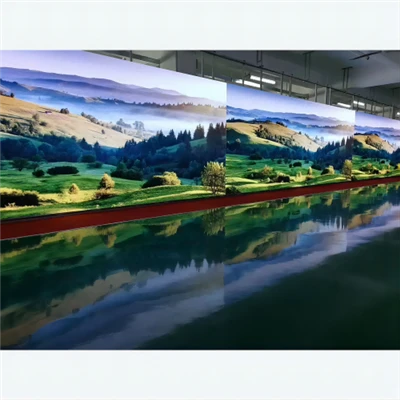
In the current fiercely competitive catering industry, traditional brick-and-mortar stores are facing multiple challenges such as the impact of e-commerce and the fragmentation of consumer attention. A particular catering brand has achieved a remarkable 40% year-on-year surge in profits by installing an intelligent menu LED display wall in the core area of its stores. This transformation is not coincidental but rather a typical example of technology empowering catering operations. This article will systematically analyze how LED display walls reconstruct the business logic of the catering industry from four dimensions: cost optimization, operational efficiency, consumer experience, and marketing innovation.
I. Dynamic Cost Control: From "Fixed Expenditure" to "Flexible Investment"
In the traditional cost structure of the catering industry, menu updates, advertisement production, and staff training constitute three major hidden burdens. Paper menus require redesign and reprinting every quarter, with an annual cost exceeding 20,000 yuan per store. Replacing lightbox advertisements necessitates professional team installation, with a single cost of 3,000 yuan. When new products are launched, waitstaff need to spend a significant amount of time explaining the new dishes to customers, resulting in high training costs.
The LED display wall completely transforms this model through digital technology:
Instant Content Updates: Utilizing a cloud-based management system, operators can modify menu prices, adjust dish orderings, and release promotional information in real time via their mobile phones. Tests conducted by a certain chain brand show that the product launch cycle has been shortened from 7 days to 2 hours, and inventory turnover has increased by 35%.
Zero Material Waste: The dynamic template library supports thousands of combination schemes, enabling automatic switching of content such as holiday themes, time-limited specials, and weather-related recommendations. For example, hot drink combos are automatically promoted on rainy days, and quick and easy meals are highlighted during the lunch rush. This precision marketing has boosted the sales of individual products by 22%.
Reallocation of Labor Costs: Waitstaff no longer need to memorize information about new products and can dedicate more time to service upgrades. According to statistics from a hot pot restaurant, after the installation of the display wall, the average number of tables served by waitstaff per day increased by 18, and customer complaint rates decreased by 40%.
II. Operational Efficiency Revolution: A Data-Driven Intelligent Decision-Making System
The LED display wall is not just a display tool but also an operational hub that integrates Internet of Things (IoT), big data, and AI technologies. Its core value is manifested in three aspects:
Inventory Visual Management: By connecting with the kitchen system, the display can show the real-time inventory status of dishes. When the remaining quantity of a dish falls below a certain threshold, the system automatically moves it to the end of the menu and marks it as "running out soon." This warning mechanism has reduced the out-of-stock rate from 12% to 3%.
Customer Flow Optimization Engine: Combining heat-sensing technology, the display can analyze data such as customer dwell time and click frequency. Based on the analysis results, a certain Western restaurant adjusted its menu layout, placing high-margin dishes in the prime viewing area for customers, thereby increasing the sales proportion of this category from 28% to 41%.
Intelligent Energy Consumption Control: Using common cathode drive technology, the display consumes 40% less power than traditional lightboxes. Coupled with light sensors, the screen brightness can be automatically adjusted according to ambient light, further saving on electricity costs. Calculations by a 200-square-meter restaurant show that the annual energy-saving cost reaches 12,000 yuan.
III. Consumer Experience Upgrade: From "Functional Satisfaction" to "Emotional Resonance"
Against the backdrop of Generation Z becoming the main consumer force, the LED display wall reshapes the dining scene through three major innovations:
Immersive Interactive Experience: Touch-enabled displays allow customers to browse dish details independently, including information on ingredient origins, cooking methods, and calorie content. After introducing 3D food models, a certain light food brand saw a 40% reduction in the average decision-making time for customers when ordering and a 25% increase in repurchase rates.
Social Currency Generator: Featuring a "food photo wall," customers' dining photos can be instantly projected onto the screen and turned into electronic photo albums for sharing on social media platforms. This user-generated content (UGC) dissemination has increased natural foot traffic to stores by 65%, and a certain internet-celebrity restaurant has topped the popular list on Dianping (a Chinese restaurant review platform) for three consecutive months as a result.
Emotional Value Provider: Through AI algorithms analyzing customer facial expressions and tones of voice, the display can automatically push personalized services. For example, when the system detects a customer frowning, it immediately pops up a message asking, "Would you like to adjust the spiciness level of the dish?" When a birthday scene is identified, it automatically plays a blessing animation and offers a dessert coupon. This emotional service has resulted in a customer satisfaction score of 92 out of 100.
IV. Marketing Ecosystem Reconstruction: From "Traffic Acquisition" to "Private Domain Deposit"
The LED display wall has constructed a complete marketing closed loop of "display-interaction-conversion-repurchase":
Precision Time-Slot Marketing: Based on different time slots such as breakfast, lunch, dinner, and late-night snacks, the theme interface and recommended combos are automatically switched. Tests by a certain tea beverage brand show that time-slot marketing has increased customer traffic during off-peak hours by 33% and improved overall store efficiency by 18%.
Gamified Promotion Mechanism: Interactive games such as "big screen lottery," "dish puzzle," and "time-limited flash sales" are developed, allowing customers to participate by scanning QR codes with their mobile phones. After introducing the "skewer puzzle" game, a certain barbecue restaurant saw a 50% increase in beer sales and a reduction in the customer churn rate during waits exceeding 20 minutes, down to 8%.
In-Depth Operation of Membership System: Connected with the CRM system, the display can identify membership levels and push exclusive benefits. For example, gold members enjoy "queue-free privileges," and silver members receive "dish upgrade coupons." This differentiated service has increased the proportion of member consumption from 35% to 62%.
Integration of Cross-Industry Resources: The display reserves 20% of its advertising space for brand exposure by partner companies, forming an ecological alliance of "catering + retail + entertainment." A restaurant in a shopping mall has collaborated with a nearby cinema to launch a "free movie ticket with meal purchase" promotion, achieving bidirectional customer flow between the two parties.
V. Technological Iteration Directions: The Intelligent Hub of Future Catering
The LED display wall has now entered the 4.0 era, with two major trends reshaping the industry landscape:
Transparent Screen Technology Breakthrough: Transparent displays using Micro LED technology can replace traditional glass curtain walls, maintaining 85% light transmittance while displaying menus. After application in a certain Japanese restaurant, it serves as a transparent lighting wall during the day and transforms into a dynamic food painting at night, increasing spatial value by 300%.
Integration of Holographic Projection: Combined with 3D holographic technology, dishes can be suspended and presented above the dining table, allowing customers to view them from 360 degrees through gesture operations. Tests by a certain high-end restaurant show that this display method has increased the average customer spend by 120 yuan, with customers willing to pay a premium for the technological experience.
Why Choose Us as Your Trusted LED Display Partner?
With 15+ years of manufacturing experience, we are a leading LED display producer serving 60+ countries worldwide. Our core strengths include:
✅ OEM/ODM Support – Customized solutions tailored to your specific needs
✅ Certified Quality – All products meet international standards (CE, RoHS, ISO certified)
✅ Cost-Effective Production – Competitive pricing without compromising quality
✅ Global Logistics Network – Reliable shipping to all major markets
✅ R&D Innovation – Cutting-edge LED technology for superior performance
We specialize in indoor/outdoor LED screens, rental displays, and creative installations. From small batches to bulk orders, our flexible manufacturing capacity ensures timely delivery.
Let's build brilliant visual solutions together! Contact us today for a quote.
📱 WeChat: 86 18676738905
📧 Email: Ledhll88@163.Com
🌐 Website: Www.Hll-Ledscreens.Com
Send Inquiry