


Related terms for led display
Oct 15, 2024
Leave a message
Related terms for led display
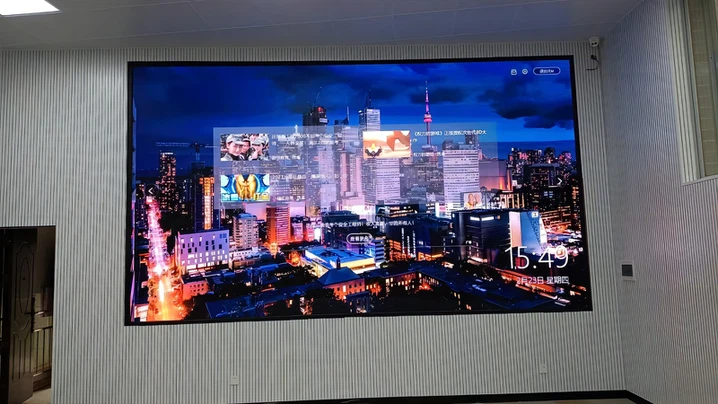
1. LED brightness
The brightness of a light-emitting diode is generally expressed in luminous intensity, which is measured in candela cd; 1000UCD = 1 mcd, 1000mcd = 1 cd. The light intensity of a single LED for indoor use is generally 500ucd-50 mcd, while the light intensity of a single LED for outdoor use should generally be 100 mcd-1000 mcd, or even more than 1000 mcd.
2. LED pixel module
The LEDs are arranged in matrices or pen segments and pre-made into standard-sized modules. Indoor display screens commonly used are 8*8 pixel modules, 8 characters and 7-segment digital modules. The outdoor display pixel module has 4*4, 8*8, 8*16 pixels and other specifications. The pixel module for outdoor display is also called the header bundle module because each pixel is composed of more than two LED tube bundles.
3. Pixel and pixel diameter
Each LED light-emitting unit (point) that can be individually controlled in an LED display is called a pixel (or pixel). Pixel diameter ∮ refers to the diameter of each pixel in millimeters.
For indoor displays, generally one is a single LED with a circular shape. The common pixel diameter calibration of indoor display screen is ∮ 3.0, ∮ 3.75, ∮ 5.0, ∮ 8.0, etc., among which ∮ 3.75 and ∮ 5.0 are the most.
In the outdoor environment, in order to improve the brightness and increase the viewing distance, a pixel contains more than two cluster LEDs; Since more than two cluster LEDs are generally not round, the pixel diameter of outdoor display is generally expressed by the average spacing of two pixels: P10, P11.5, P16, P22, and P25.
4. Point spacing, pixel density and information capacity
The center distance or dot pitch of the two pixels of the LED display; The number of pixels per unit area is called pixel density; The amount of display content contained in a unit area is called the information capacity. The essence of these three is to describe the same concept: the pixel density is reflected from the distance between two pixels, and the pixel spacing and pixel density are the physical properties of the display; Information capacity is the quantitative unit of information carrying capacity of pixel density.
The smaller the dot spacing, the higher the pixel density, the more information capacity, and the closer the viewing distance.
The larger the dot spacing, the lower the pixel density, the less information capacity, and the farther it is suitable for viewing.
5. Resolution
The number of rows and columns of LED display pixels is called the resolution of the LED display. Resolution is the total number of pixels in a display, which determines the information capacity of a display.
6. LED Display (LED Panel)
The LED pixel module is assembled and arranged into a matrix according to the actual size of the need, and is equipped with a special display driver circuit, DC regulated power supply, software, frame and exterior decoration, etc., which constitutes an LED display.
7. Grayscale
Grayscale refers to the degree to which the luminescence of a pixel changes in light and darkness, and the grayscale of a primary color generally ranges from 8 to 1024. For example, if the grayscale of each primary color is 256 levels, for a dual-base color color screen, the display color is 256×256=64K colors, which is also called a 256-color display.
8. Double primary color
Nowadays, most color LED displays are dual-base color screens, that is, each pixel has two LED dies: one is a red core, and the other is a green core. The pixel is red when the red tube core is bright, the pixel is green when the green tube core is bright, and the pixel is yellow when the red and green cores are bright at the same time. Among them, red and green are called primary colors.
9. Full color
Red and green plus blue
Send Inquiry