


Indoor vs. Outdoor LED Displays: How to Choose the Right Protection Rating for Your Environment
May 28, 2025
Leave a message
Indoor vs. Outdoor LED Displays: How to Choose the Right Protection Rating for Your Environment
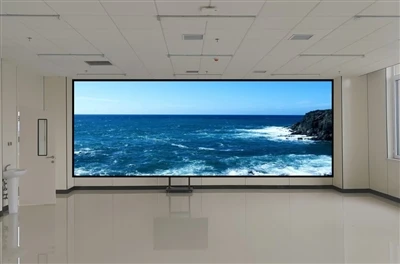
LED displays, as crucial tools for information display and dissemination, are widely applied in various indoor and outdoor settings. However, different usage environments place distinct requirements on the protection grades of LED displays. An appropriate protection grade not only ensures the normal operation of LED displays in specific environments but also extends their service life and reduces maintenance costs.
I. Overview of LED Display Protection Grades
(I) Definition of Protection Grades
The protection grade of an LED display is indicated by the IP code, where IP stands for Ingress Protection. It is a standard formulated by the International Electrotechnical Commission (IEC). The IP code consists of two digits. The first digit represents the equipment's level of protection against dust and foreign objects, while the second digit denotes the degree of sealing against moisture and water ingress. The larger the number, the higher the protection grade.
(II) Range of Protection Grades
The dust-protection grades typically range from IP1X to IP6X. IP1X implies a relatively low level of protection against large objects, whereas IP6X indicates complete prevention of solid particle ingress. The water-protection grades range from IPX0 to IPX9K. IPX0 means no water-protection capability, while IPX9K signifies the ability to withstand high-temperature and high-pressure strong water flow ingress.
(III) Relevant Standards
The industry standard "General Specifications for LED Displays" stipulates that the shell protection grade of LED displays should meet the requirements of the national standard "Degrees of Protection Provided by Enclosures (IP Code)" GB4208. The screen body of indoor LED displays should not be less than IP20, and that of outdoor LED displays should not be less than IP33. Meanwhile, the industry standard "Test Methods for LED Displays" classifies the shell protection grades of displays into three levels: A, B, and C, with C being the highest requirement. For indoor displays, the protection grade for Level A should not be less than IP20, for Level B not less than IP30, and for Level C not less than IP31. For outdoor displays, the protection grade for Level A should not be less than IP33, for Level B not less than IP54, and for Level C not less than IP66.
II. Selection of Protection Grades for Indoor LED Displays
(I) General Indoor Environments
In general indoor environments such as shopping malls, conference rooms, and offices, where there is no direct rain exposure, an IP30 grade is usually sufficient. IP30 means that the display can prevent the entry of solid foreign objects with a diameter greater than 2.5mm and has no water-protection requirements. Since these indoor spaces are relatively dry and clean, with less dust intrusion and no direct water exposure, an IP30 protection grade can meet the basic usage needs.
(II) Special Indoor Environments
For some special indoor environments, such as internal displays in aquariums, by the side of swimming pools, or places with a high risk of extreme humidity and water immersion, the protection grade requirements are different. Although indoor environments usually do not require as high a water-protection grade as outdoor ones, products with an IP65 protection grade, such as COB or GOB products, can also be considered in these special cases. IP65 means that the product has complete dust-prevention capability and can withstand water washing without any damage, better coping with possible humidity and water immersion situations to ensure the normal operation of the LED display.
(III) Indoor LED Floor Displays
Indoor LED floor displays are installed on the floor and are frequently stepped on, so they need to achieve a certain level of water and dust protection. Currently, the mainstream protection grades of LED floor displays reach IP65. This can not only prevent dust intrusion but also ensure that they are not affected in possible humid environments, guaranteeing stable operation under long-term stepping and complex conditions.
III. Selection of Protection Grades for Outdoor LED Displays
(I) Common Outdoor Environments
In common outdoor environments, such as outdoor advertising screens and LED pole-mounted displays, a front protection grade of IP65 or above and a back protection grade of IP54 or above are generally selected. IP65 means that the front can completely prevent dust ingress and withstand water washing without any damage, being able to resist dust, rain, and other invasions that may occur outdoors. IP54 means that the back can prevent water splashing from all directions, to a certain extent protecting the internal parts of the display from water damage. This combination of protection grades can meet the usage needs of most outdoor environments and ensure the normal operation of the display under various weather conditions.
(II) Harsh Outdoor Environments
For some particularly harsh outdoor locations, such as riverbanks or coastal areas, where they may be exposed to stronger sea winds, waves, and rain, higher requirements are placed on the protection grade of LED displays. In this case, protection grades of IP66 or IP67 can be chosen. IP66 means that the product can completely prevent dust ingress and withstand violent sea-wave impacts or strong water spraying. IP67 means that the product can completely prevent dust ingress and withstand short-term immersion, better protecting the display from damage in harsh environments and extending its service life.
IV. Impacts of Different Protection Grades on the Performance and Lifespan of LED Displays
(I) Impact of Dust-Prevention Performance
If the dust-prevention grade of an LED display is insufficient, dust can easily enter the interior of the display. Dust may adhere to key components such as LED chips and driver circuits, affecting the chip's heat dissipation and luminous efficiency, leading to a decline in display performance, such as reduced brightness and color deviation. At the same time, dust may also enter the circuit part, causing short-circuit faults and shortening the display's service life. For example, in some industrial areas with a large amount of dust, if an LED display with a low dust-prevention grade is used, display problems may occur soon, requiring frequent maintenance and component replacement.
(II) Impact of Water-Proof Performance
LED displays with poor water-proof performance may have water enter the interior when exposed to water, damaging electronic components such as circuit boards and chips. Water can cause short-circuits in the circuit, making the display unable to work normally and even causing permanent damage. Especially in outdoor environments, rain and humid air may pose threats to the display. If the display's water-proof grade is high enough to effectively prevent water ingress, these problems can be avoided, ensuring the stable operation of the display under various weather conditions and extending its service life.
(III) Comprehensive Impact
An appropriate protection grade can comprehensively safeguard the performance and lifespan of LED displays. Displays with high protection grades can better resist the impact of the external environment, reducing faults and damages caused by dust and water, and lowering maintenance costs. At the same time, stable performance can also ensure that the display provides clear and accurate display effects in various environments, meeting users' usage needs. On the contrary, if the protection grade is not properly selected, the display may frequently malfunction, affecting the usage effect and increasing maintenance and replacement costs.
V. Other Factors to Consider When Selecting Protection Grades
(I) Cost Factors
LED displays with higher protection grades usually have higher production costs. This is because high protection grades require the use of better-quality materials and more advanced manufacturing processes to ensure the dust- and water-proof performance of the display. When selecting a protection grade, it is necessary to comprehensively consider the cost-effectiveness. If the usage environment does not have high requirements for the protection grade, choosing an excessively high protection grade may increase unnecessary costs. However, if the usage environment is harsh, choosing an excessively low protection grade may lead to frequent subsequent maintenance and replacement, increasing long-term costs. Therefore, it is necessary to reasonably select the protection grade according to the actual usage environment and budget.
(II) Usage Scenario Requirements
Different usage scenarios have different requirements for the protection grade of LED displays. For example, in some temporary outdoor events, the requirements for the protection grade may be relatively low because the event duration is short and the environmental impact is relatively small. However, in some long-term fixed outdoor advertising displays, which need to be exposed to various weather conditions for a long time, the requirements for the protection grade are higher. In addition, for some venues with extremely high requirements for display effects, such as large-scale concerts and sports events, besides the protection grade, performance indicators such as the display's brightness, contrast ratio, and refresh rate also need to be considered to ensure high-quality display effects under various environments.
(III) Maintenance Difficulty
LED displays with high protection grades usually have more complex structures, and the maintenance difficulty may also be relatively greater. Professional technicians and special tools are required during the installation and maintenance processes. If the usage environment is relatively good and the requirements for the protection grade are not high, displays with relatively simple maintenance can be selected to reduce maintenance costs and difficulty. However, if the usage environment is harsh and high-protection-grade products have to be chosen to ensure the normal operation of the display, corresponding maintenance preparations need to be made, including establishing a professional maintenance team and equipping necessary maintenance tools.
Our factory HELILAI main products: intelligent and cultural creative LED display, high-definition small-pitch LED display, indoor and outdoor full-color LED display, LED transparent glass screen, intelligent LED floor tile scene screen, intelligent sensor LED interactive screen.
Application Areas: dedicated to intelligent transportation, intelligent security monitoring, radio and television broadcasting, video conferencing, intelligent advertising media, real estate and commercial display, science and education stadiums, cultural performance stage display, smart scene creative display, and other intelligent terminal smart display engineering applications.
The company's products have passed: CE ,Rohs certification, BIS certification ,3C certification, green environmental certification, strictly in the ISO9001: quality certification system to improve product quality management, in accordance with the process of quality control procedures in strict accordance with IQC, IPQC, CFQC, QA Chain management.
If you are looking for a manufacturer or supplier of LED display and module, please feel free to contact us! We will definitely give you a professional plan, reasonable price, and thoughtful service!
Why Choose HELILAI?
15+ Years of specialized LED display manufacturing
200+ circular display installations worldwide
Turnkey Solutions: Design → Production → Installation → Maintenance
Contact Our Engineering Team:
📱 WeChat: 86 18676738905
📧 Email: Ledhll88@163.Com
🌐 Website: www.hll-ledscreens.com
Send Inquiry