


How do 3D naked-eye LED displays increase brand ad engagement by 400%?
Jul 25, 2025
Leave a message
How do 3D naked-eye LED displays increase brand ad engagement by 400%?
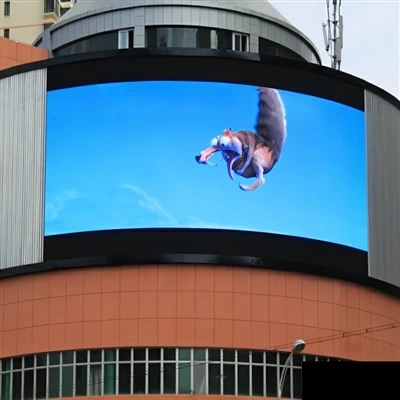
In the field of digital advertising, the interaction rate is one of the core indicators for measuring the effectiveness of communication. Traditional print advertisements generally have an interaction rate of less than 1%, while 3D naked - eye LED displays can elevate this figure to 4% - 5% through technological innovation and creative integration, achieving an increase of over 400%. This breakthrough stems from their unique three - dimensional visual presentation, dynamic content design, and multi - dimensional interaction capabilities. This article will elaborate in detail from four dimensions: technological principles, content creation, scenario adaptation, and sensory integration.
I. Technological Principles: The Underlying Logic of Stereoscopic Vision
The core of 3D naked - eye LED displays lies in leveraging the principle of human binocular parallax to construct a three - dimensional spatial perception without the need for auxiliary devices through optical design and algorithmic optimization. Their technological realization mainly relies on three approaches:
Parallax Barrier Technology
A precision grating layer is applied to the surface of the LED screen, with alternating transparent and opaque stripes controlling the direction of light propagation. When viewers are positioned at specific angles, their left and right eyes receive images from different pixel regions, which the brain automatically fuses to create a stereoscopic perception. This technology requires a high refresh rate (≥3840Hz) to eliminate screen flicker and employs 14 - 16bit grayscale processing to ensure natural color transitions and avoid moiré patterns.
Lenticular Lens Technology
A lenticular lens array is mounted in front of the screen, with each lens covering multiple pixels and splitting them into sub - pixels projected at different angles to the left and right eyes. This technology achieves parallax separation through physical refraction, offering a higher brightness retention rate (up to over 90%) suitable for outdoor environments with strong light. Combined with curved or L - shaped corner screen designs, it can further enhance the sense of visual depth, such as simulating the effect of objects "leaping out" of the screen through 90 - degree right - angle joint arrangements.
Multi - Screen Linkage and Dynamic Compensation
Adopting irregular screen structures (such as curved or wavy shapes) and spatial combinations of multiple screens, complemented by real - time perspective calibration algorithms, dynamically adjusts image distortion parameters based on the viewer's position. For instance, when viewers with heights ranging from 1.5 to 1.8 meters move, the system automatically compensates for perspective deviations to ensure consistent stereoscopic effects across a 170 - degree wide viewing angle. Additionally, AI cameras tracking the viewer's gaze focus enable precise synchronization between content and line of sight, enhancing immersion.
II. Content Creation: From "Planar Storytelling" to "Spatial Drama"
Traditional advertising relies on two - dimensional imagery to convey information, whereas 3D naked - eye LED displays necessitate constructing a "spatial narrative" logic to enhance interaction willingness through the following strategies:
Out - of - Frame Design and Dynamic Overflow
Breaking the physical boundaries of the screen, visual elements are designed to "break through" screen limitations. For example, virtual water cascades from the top of the screen, or mechanical creatures extend their tentacles from the corners, triggering viewers' curiosity and prompting photo - sharing behavior. Research indicates that such content can extend viewer dwell time by 3 - 5 times and increase spontaneous social media sharing rates by 60%.
Perspective - Dependent Narrative
Multi - layered content is designed based on the viewer's position. For instance, when viewers are close to the screen, product details are showcased; when they move away, the overall interactive scene is presented. Through this dynamic "exploration - discovery" process, passive viewing is transformed into active participation.
Real - Time Data - Driven Content
Integrating environmental sensors (such as those for temperature, humidity, and light) with social media trend data enables dynamic adjustments to advertising content. For example, on rainy days, the screen displays virtual umbrellas interacting with pedestrians, or virtual financial characters react with corresponding facial expressions based on real - time stock market data. This "scenario adaptation" strategy can improve ad relevance scores by 40% and enhance viewer interaction willingness by 2.3 times.
III. Scenario Adaptation: From "Traffic Entry Points" to "Experience Centers"
The interaction effectiveness of 3D naked - eye LED displays highly depends on scenario selection and spatial design, requiring customized solutions tailored to different scenario characteristics:
Commercial Complexes: Creating "Check - in Economy" Engines
Deploying L - shaped corner screens in shopping mall atriums or corners, combined with AR interaction technology, enables viewers to trigger virtual makeup trials, product 3D dissections, and other interactive functions by scanning the screen with their phones. Data shows that such deployments can increase mall foot traffic by 25% and boost sales of surrounding stores by 18%.
Transportation Hubs: Reconstructing the Value of "Fragmented Time"
Long, strip - shaped screens are installed in subway corridors or airport waiting halls, transforming commuting scenarios into brand information touchpoints through dynamic path guidance and real - time information overlays (such as virtual aircraft delay animations during flight delays). Tests indicate that passengers' attention spans on dynamic advertisements extend from 7 seconds to 23 seconds, with information retention rates increasing by 65%.
Cultural Landmarks: Empowering "Technology + Humanities" Narratives
In museums, theaters, and other venues, 3D naked - eye technology is used to restore historical scenes or artistic works. For example, the screen presents virtual artifact restoration processes or allows viewers to "step into" famous paintings and interact with virtual characters. Such applications can increase viewer dwell time by 40% and boost repeat visit rates by 28%.
IV. Sensory Integration: Constructing a "Five - Sense Immersion" Experience
Enhancing interaction rates relies not only on visual impact but also on multi - sensory collaborative stimulation to form memory anchors:
Tactile Feedback Integration
Pressure sensors or vibrating floors are deployed around the screen to trigger tactile feedback when viewers touch virtual objects or when explosive scenes are displayed on the screen. For example, in a car advertisement, when viewers "touch" a virtual car door, the floor vibrates to simulate the sensation of closing the door, increasing product favorability by 35%.
Olfactory Simulation Systems
Micro - mist fragrance dispensers are combined to release corresponding scents based on screen content. For instance, food advertisements emit food aromas, and perfume advertisements trigger specific fragrance notes, reinforcing brand associations through olfactory memory. Experiments show that olfactory intervention can increase ad recall rates from 12% to 37%.
Spatial Audio Design
Beamforming technology is employed to achieve directional sound propagation, ensuring that viewers hear 3D sound effects synchronized with the screen content in specific areas. For example, when a virtual animal "runs out" from the left side of the screen, the sound trajectory moves accordingly, creating a "sound - follows - image" stereoscopic field. Research indicates that spatial audio can increase viewer emotional engagement by 50%.
V. Data - Driven Optimization: From "Experience - Based Decision - Making" to "Intelligent Iteration"
By deploying viewer behavior analysis systems to collect real - time data on dwell time, gaze trajectories, interaction frequencies, etc., an advertising effectiveness evaluation model is constructed:
Heatmap Analysis
Infrared cameras are used to track viewer congregation areas, optimizing content layout. For example, if 80% of viewers are found to gather in the bottom - right corner of the screen, core information can be adjusted to that area, increasing key information reach by 40%.
A/B Testing Mechanism
Different versions of advertisements are played simultaneously, with interaction rates, sharing volumes, and other metrics compared to select the optimal solution. For instance, testing reveals that "virtual character waving interactions" generate 2.7 times higher interaction rates than "static product displays," justifying increased investment in such content.
Predictive Content Generation
Based on historical data and machine learning algorithms, viewer preferences across different times and scenarios are predicted to automatically generate personalized advertising content. For example, light - hearted content is played during weekday lunchtimes, while in - depth narrative advertisements are switched to in the evenings, increasing average interaction rates by 22%.
Why Choose Us as Your Trusted LED Display Partner?
With 15+ years of manufacturing experience, we are a leading LED display producer serving 60+ countries worldwide. Our core strengths include:
✅ OEM/ODM Support – Customized solutions tailored to your specific needs
✅ Certified Quality – All products meet international standards (CE, RoHS, ISO certified)
✅ Cost-Effective Production – Competitive pricing without compromising quality
✅ Global Logistics Network – Reliable shipping to all major markets
✅ R&D Innovation – Cutting-edge LED technology for superior performance
We specialize in indoor/outdoor LED screens, rental displays, and creative installations. From small batches to bulk orders, our flexible manufacturing capacity ensures timely delivery.
Let's build brilliant visual solutions together! Contact us today for a quote.
📱 WeChat: 86 18676738905
📧 Email: Ledhll88@163.Com
🌐 Website: Www.Hll-Ledscreens.Com
Send Inquiry