


High-Temperature Resistant LED Display – Up to 60°C
Jun 06, 2025
Leave a message
High-Temperature Resistant LED Display – Up to 60°C
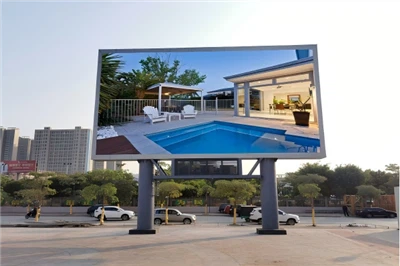
In extremely high-temperature environments, traditional LED displays often fail to operate stably due to accelerated light decay, color shifts, and even component failures. However, the new generation of high-temperature-resistant LED displays, through material innovation, thermal optimization, and intelligent temperature control technologies, has achieved continuous and stable operation at 60°C, becoming core display devices in fields such as outdoor advertising, intelligent transportation, and industrial monitoring.
I. Core Technological Breakthroughs in High-Temperature Resistance
a.Revolutionary Upgrades in Thermal Management Systems
In high-temperature environments, the junction temperature of LED displays increases by 10°C, halving their lifespan. To address this issue, industry-leading companies have adopted a three-tier thermal management architecture:
Module-Level Thermal Management: High-thermal-conductivity silicone is used to tightly bond LED chips to aluminum substrates, elevating the thermal conductivity to over 3.0 W/m·K, a 40% improvement over traditional materials.
Cabinet-Level Thermal Management: Honeycomb aluminum alloy frames, combined with forced air cooling or liquid cooling systems, keep cabinet surface temperatures below 65°C. For example, an outdoor advertising screen in Dubai has operated continuously for three years at 50°C with a failure rate below 0.1%.
Environmental-Level Thermal Management: Intelligent temperature control algorithms dynamically adjust fan speeds or liquid cooling flow rates, ensuring stable display operation across a wide temperature range of -40°C to +85°C.
b.Extreme Optimization of Material Durability
High-temperature environments impose stringent requirements on the durability of display materials:
Encapsulation Materials: High-temperature-resistant epoxy resins with a glass transition temperature (Tg) raised to 180°C are used to effectively prevent high-temperature yellowing.
Circuit Boards: FR-5 grade high-temperature-resistant PCB substrates with a thermal decomposition temperature of 350°C ensure circuit stability.
Protective Coatings: Nano-scale UV-resistant coatings are applied, reducing reflectivity to below 5% while offering superhydrophobic self-cleaning capabilities.
C.Intelligent Temperature Control and Fault Prediction
High-temperature-resistant LED displays are equipped with multi-sensor fusion systems that continuously monitor junction temperature, ambient temperature, and humidity:
When the junction temperature exceeds 85°C, the system automatically reduces the drive current to extend LED lifespan.
Machine learning algorithms predict potential failure points, issuing maintenance alerts 72 hours in advance.
Remote monitoring platforms support multi-screen coordinated management, improving operational efficiency by 60%.
II. Performance at 60°C
A.Light Decay Control and Lifespan Extension
After 50,000 hours of continuous operation at 60°C, high-quality LED displays can limit light decay to within 30%, far exceeding industry averages. Key factors include:
Low Junction Temperature Design: By optimizing drive currents and thermal structures, junction temperatures are kept below 85°C, extending LED lifespan to 100,000 hours.
Phosphor Optimization: High-temperature-resistant rare-earth phosphors are used, reducing quantum efficiency decay rates at high temperatures to 15% per 10,000 hours.
B.Color Consistency and Brightness Stability
In high-temperature environments, differences in the decay rates of red, green, and blue LEDs can lead to color shifts. New-generation displays address this through:
Dynamic Color Calibration: Color parameters are automatically calibrated every 10 minutes to ensure a ΔE value below 3.
High-Brightness LED Chips: A combination of InGaN-based blue LED chips and YAG:Ce phosphors achieves a brightness of up to 10,000 nits, maintaining over 85% brightness at 60°C.
C.Protection Levels and Reliability
High-temperature-resistant LED displays typically achieve an IP68 protection rating, offering:
Water and Dust Resistance: Multi-layer sealing structures prevent dust ingress and withstand submersion in 1.5 meters of water for 30 minutes.
Salt Spray Corrosion Resistance: Surface coatings pass 96-hour salt spray tests, making them suitable for coastal and industrially polluted areas.
Shock and Vibration Resistance: Meeting MIL-STD-810G military standards, they can withstand 10G shock and vibration.
III. Typical Application Scenarios and Case Studies
A.Outdoor Advertising and Commercial Displays
In high-temperature regions, outdoor advertising screens must operate around the clock. Examples include:
A Shopping Center in the Middle East: Equipped with P4-pitch LED displays, it operates 18 hours daily at 55°C in summer, remaining fault-free for three consecutive years.
A Desert Music Festival: Temporary P6-pitch displays operated continuously for 72 hours in 60°C sandy environments without affecting image clarity.
B.Intelligent Transportation and Public Safety
Traffic displays in high-temperature environments must ensure real-time information delivery. Typical cases include:
Highway Variable Message Signs: Operating across a temperature range of -20°C to +60°C, they broadcast real-time traffic information with brightness adjustable from 5,000 to 15,000 nits.
Urban Emergency Command Centers: P1.2 fine-pitch displays operate continuously in 60°C server rooms, supporting real-time 4K video decoding without dead pixels.
C.Industrial Monitoring and Energy Sectors
In high-temperature industrial scenarios like steel mills and oil fields, displays must possess anti-interference capabilities. Examples include:
Steel Mill Monitoring Screens: Operating at 80°C with strong electromagnetic interference, they use fiber-optic signal transmission to maintain image latency below 1ms.
Photovoltaic Power Station: Outdoor monitoring screens, powered by solar systems, reduce daily power consumption to 0.5 kWh/㎡ at 60°C.
IV. Future Technological Trends and Challenges
A.Continuous Innovation in Materials and Processes
Micro LED Technology: Through mass transfer techniques, pixel pitches are reduced to 0.1mm, enhancing display detail at high temperatures.
Graphene Thermal Management: Graphene thermal films with a thermal conductivity of 5,300 W/m·K could further reduce junction temperatures by 15°C.
Package-Free LED Chips: Removing traditional packaging materials reduces thermal resistance and improves high-temperature luminous efficiency.
B.Intelligent and Integrated Development
AI-Driven Energy-Saving Algorithms: Deep learning optimizes brightness and color, reducing energy consumption by 30% at 60°C.
5G + Edge Computing: Enables real-time synchronization of multi-screen data and supports lossless transmission of 8K video streams.
Modular Design: Supports hot-swappable maintenance, reducing fault repair times to 10 minutes.
C.Environmental and Sustainability Challenges
Lead-Free Soldering: Adoption of Sn-Ag-Cu alloys reduces heavy metal pollution.
Material Recycling Rates: Modular disassembly processes achieve metal recycling rates of 95% and precious metal extraction rates from LED chips exceeding 98%.
Energy Efficiency Standards: Compliance with EU ERP Lot 30 energy efficiency requirements, keeping standby power consumption below 0.5 W/㎡.
Our factory HELILAI main products: intelligent and cultural creative LED display, high-definition small-pitch LED display, indoor and outdoor full-color LED display, LED transparent glass screen, intelligent LED floor tile scene screen, intelligent sensor LED interactive screen.
Application Areas: dedicated to intelligent transportation, intelligent security monitoring, radio and television broadcasting, video conferencing, intelligent advertising media, real estate and commercial display, science and education stadiums, cultural performance stage display, smart scene creative display, and other intelligent terminal smart display engineering applications.
The company's products have passed: CE ,Rohs certification, BIS certification ,3C certification, green environmental certification, strictly in the ISO9001: quality certification system to improve product quality management, in accordance with the process of quality control procedures in strict accordance with IQC, IPQC, CFQC, QA Chain management.
If you are looking for a manufacturer or supplier of LED display and module, please feel free to contact us! We will definitely give you a professional plan, reasonable price, and thoughtful service!
Why Choose HELILAI?
15+ Years of specialized LED display manufacturing
200+ circular display installations worldwide
Turnkey Solutions: Design → Production → Installation → Maintenance
Contact Our Engineering Team:
📱 WeChat: 86 18676738905
📧 Email: Ledhll88@163.Com
🌐 Website: www.hll-ledscreens.com
Send Inquiry