


High Refresh Rate vs. High Brightness: Which LED Display Feature Matters Most for Your Project?
May 29, 2025
Leave a message
High Refresh Rate vs. High Brightness: Which LED Display Feature Matters Most for Your Project?
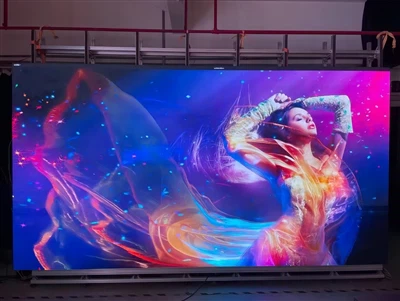
In today's era of digital information, LED displays, as an efficient and intuitive information display tool, are widely used in numerous fields such as advertising, sports events, stage performances, commercial exhibitions, and traffic command. With the continuous advancement of technology, the performance of LED displays is also constantly improving. Among them, high refresh rate and high brightness are two key characteristics that have attracted much attention. However, in actual project applications, how to make a reasonable choice between high refresh rate and high brightness according to project requirements has become an important issue faced by many users. This article will delve into the concepts, technical principles, application scenarios, as well as the advantages and disadvantages of high refresh rate and high brightness to help customers select the most suitable LED display.
I.High Refresh Rate: A Guarantee for Smooth Dynamic Images
A.Concept and Technical Principles
The refresh rate refers to the number of times an LED display updates the image per second, measured in Hertz (Hz). A high refresh rate means that the display can complete multiple image refreshes in a shorter period, thereby presenting a smoother and more stable dynamic image. From a technical perspective, the refresh rate of an LED display is closely related to factors such as the data processing capability of the control system, the performance of the driver chip, and the scanning method.
In an LED display, image data is transmitted from the control system to the driver chip, which then controls the on/off state of the LED lamp beads based on this data to achieve image display. Displays with a high refresh rate typically adopt more advanced control algorithms and high - speed driver chips, enabling them to quickly and accurately process and transmit image data. This ensures that each frame of the image can be displayed in an extremely short time, reducing phenomena such as image flickering and trailing.
B.Application Scenarios
Live Sports Broadcasting: In live sports broadcasting, dynamic images such as fast - moving athletes and speeding balls require high - refresh - rate LED displays for presentation. For example, in a football match, the players' running, passing, and shooting actions are all very rapid. If the display's refresh rate is insufficient, the image will appear blurred and have trailing effects, affecting the viewing experience of the audience. In contrast, a high - refresh - rate LED display can clearly capture every detail of the action, making the audience feel as if they are at the scene.
Stage Performances: Stage performances often involve a large number of lighting effects, dance movements, and rapidly changing scenes. A high - refresh - rate LED display can perfectly coordinate with stage lighting, audio, and other equipment to achieve a smooth visual effect, enhancing the appeal and impact of the performance. For instance, in a concert, the singer's dancing and the changes in stage effects all require a high - refresh - rate display to present, creating a colorful and spectacular stage atmosphere.
Virtual Reality (VR) and Augmented Reality (AR) Applications: In VR and AR applications, users need to interact with the virtual environment through head - mounted devices or displays. A high - refresh - rate LED display can provide a smoother and more natural visual feedback, reducing users' dizziness and discomfort and improving the sense of immersion. For example, in VR games, rapid scene switching and character movements require a high - refresh - rate display to ensure the continuity of the image, allowing players to better immerse themselves in the game world.
C.Advantages
Smooth Image: A high refresh rate can significantly reduce image flickering and trailing phenomena, making dynamic images smoother and more natural. This is particularly important for scenarios that require fast - moving images, such as watching sports events, movies, and playing games, providing a better visual experience.
Reduced Visual Fatigue: Displays with a low refresh rate can cause image flickering, and prolonged viewing can easily lead to eye fatigue, headaches, and other discomforts. A high - refresh - rate display can effectively reduce image flickering, lowering the probability of visual fatigue and protecting users' eye health.
Adaptability to High - Speed Photography: In some situations that require high - speed photography, such as sports events and scientific research, a high - refresh - rate LED display can match high - speed photography equipment, ensuring that the captured images are clear and free of trailing effects, providing accurate data for subsequent analysis and processing.
D.Disadvantages
High Cost: Achieving a high refresh rate requires the adoption of more advanced control chips, drive circuits, and display technologies, which will increase the manufacturing cost of LED displays. Therefore, high - refresh - rate LED displays are relatively expensive and may exceed the budget of some projects.
Increased Power Consumption: A high refresh rate means that the display needs to refresh images more frequently, which will lead to an increase in power consumption. In some scenarios with strict power consumption requirements, such as outdoor advertising displays that need to operate for a long time and rely on solar power supply, a high refresh rate may pose certain challenges.
High Data Transmission Requirements: A high - refresh - rate LED display needs to process a large amount of image data, which places higher requirements on data transmission bandwidth and stability. If there is a delay or packet loss during data transmission, it may lead to image stuttering or distortion, affecting the display effect.
II.High Brightness: Clear Display in Strong Light Environments
A.Concept and Technical Principles
Brightness refers to the luminous flux emitted by an LED display per unit area, measured in nits. High brightness means that the display can clearly display images and text in strong light environments. The brightness of an LED display mainly depends on factors such as the luminous efficiency of the LED lamp beads, the number of lamp beads, and the drive current.
To improve the brightness of an LED display, manufacturers usually adopt high - brightness LED lamp beads and increase the number of lamp beads. At the same time, by optimizing the drive circuit and heat dissipation design, the luminous efficiency and stability of the LED lamp beads are improved. In addition, some high - end LED displays also adopt local dimming technology, which dynamically adjusts the brightness of different regions according to the image content, further improving the display effect and energy - saving performance.
B.Application Scenarios
Outdoor Advertising: Outdoor advertising displays are usually installed in outdoor places such as building facades, squares, and streets, and need to face strong sunlight. A high - brightness LED display can maintain a clear display effect in strong light environments, attracting pedestrians' attention and improving the advertising dissemination effect. For example, on an outdoor advertising billboard in a bustling commercial area, even under direct sunlight at noon, the advertising content can still be clearly displayed.
Traffic Command: Traffic command displays are used to display traffic information, signs, etc., and need to ensure that they can be clearly seen by drivers under various weather and lighting conditions. A high - brightness LED display can meet this requirement, ensuring the accurate transmission of traffic information and safeguarding traffic safety. For example, on variable message signs on highways, they can provide real - time road condition information to drivers with a high - brightness display effect regardless of day or night.
Large - Scale Event Venues: At large - scale event venues such as concerts, sports events, and exhibitions, the venue is usually large, and the audience is far away from the display. A high - brightness LED display can ensure that the audience at a long distance can also clearly see the display content, enhancing the atmosphere and effect of the event. For example, on the stage of a large - scale concert, a high - brightness LED display can show wonderful video images and special effects, bringing a shocking visual experience to the audience.
C.Advantages
Good Visibility in Strong Light Environments: A high - brightness LED display can maintain a clear display effect in strong light environments and is not affected by external lighting conditions. This is very important for application scenarios such as outdoor advertising and traffic command that need to work under strong light, ensuring the effective transmission of information.
Clear Viewing at Long Distances: In some large - scale event venues or public places, the audience is far away from the display. A high - brightness LED display can improve the contrast ratio and viewing angle of the image, allowing the audience at a long distance to also clearly see the display content and expanding the information dissemination range.
Good Environmental Adaptability: A high - brightness LED display has good environmental adaptability and can operate normally under different weather conditions, such as sunny, cloudy, and rainy days. This provides a guarantee for the long - term stable operation of the display.
D.Disadvantages
High Energy Consumption: To achieve high brightness, an LED display needs to consume more electrical energy. This will not only increase operating costs but may also have a certain impact on the environment. In some scenarios with strict energy consumption restrictions, such as energy - efficient buildings and green data centers, high - brightness LED displays may not be suitable.
Heat Dissipation Issues: High - brightness LED lamp beads generate a large amount of heat during operation. If the heat cannot be dissipated in a timely and effective manner, it will affect the lifespan and stability of the LED lamp beads. Therefore, high - brightness LED displays usually need to be equipped with an efficient heat dissipation system, which will increase the volume and weight of the display and also increase the manufacturing cost.
Potential Light Pollution: At night or under low - light conditions, excessively high brightness may cause light pollution to the surrounding environment, affecting residents' lives and rest. Therefore, when using a high - brightness LED display, it is necessary to reasonably control the brightness to avoid adverse impacts on the environment.
III.How to Choose According to Project Requirements
A.Consider Application Scenarios
Indoor Applications: In indoor environments, the lighting conditions are relatively stable, and there is usually no need for particularly high brightness. At this time, if the project needs to display a large number of dynamic images, such as live sports broadcasting, stage performances, and conference displays, a high - refresh - rate LED display is more suitable. It can provide a smooth and clear image effect, enhancing the audience's viewing experience.
Outdoor Applications: The lighting conditions in outdoor environments are complex and changeable, and a high brightness is required under direct sunlight. Therefore, for application scenarios such as outdoor advertising and traffic command, a high - brightness LED display is the first choice. It can maintain a clear display effect in strong light environments, ensuring the effective transmission of information.
B.Consider Viewing Distances
Close - Up Viewing: When the audience is close to the display, there are higher requirements for the clarity and smoothness of the image. At this time, a high - refresh - rate LED display can provide a better visual experience, reducing image flickering and trailing phenomena, allowing the audience to see the image details more clearly.
Long - Distance Viewing: In the case of long - distance viewing, brightness becomes a key factor affecting the display effect. A high - brightness LED display can improve the contrast ratio and viewing angle of the image, allowing the audience at a long distance to also clearly see the display content. Therefore, for application scenarios that require long - distance viewing, such as large - scale event venues and outdoor advertising, a high - brightness LED display should be selected.
C.Consider Budget and Costs
Limited Budget: If the project budget is limited, it is necessary to make a trade - off between high refresh rate and high brightness. In this case, a choice can be made based on the core requirements of the project. If the project pays more attention to the smoothness and dynamic effect of the image, the brightness requirement can be appropriately lowered, and a relatively low - cost high - refresh - rate LED display can be selected. If the project needs to display information in a strong light environment and has relatively low requirements for image smoothness, an LED display with high brightness but a moderate refresh rate can be chosen.
Long - Term Operating Costs: In addition to the initial purchase cost, the long - term operating costs of an LED display, including energy consumption and maintenance costs, also need to be considered. A high - brightness LED display has high energy consumption, which will increase operating costs. Although a high - refresh - rate LED display has a relatively high manufacturing cost, if it can improve the display effect and attract more viewers or customers, it may bring higher economic benefits. Therefore, it is necessary to comprehensively consider various cost factors when making a choice.
D.Consider Special Requirements
Photography and Videography Needs: If the project needs to carry out photography or videography recording, such as live sports broadcasting and stage performance recording, a high - refresh - rate LED display is more suitable. It can reduce image trailing and flickering phenomena, ensuring that the captured images are clear and smooth and providing high - quality materials for post - production.
Energy Conservation and Environmental Protection Requirements: In some scenarios with high requirements for energy conservation and environmental protection, such as green buildings and sustainable development projects, it is necessary to select an LED display with low energy consumption. At this time, products with moderate refresh rates and brightness can be selected under the premise of meeting basic display requirements, or LED displays with energy - saving functions, such as local dimming technology and intelligent brightness adjustment, can be adopted.
Our factory HELILAI main products: intelligent and cultural creative LED display, high-definition small-pitch LED display, indoor and outdoor full-color LED display, LED transparent glass screen, intelligent LED floor tile scene screen, intelligent sensor LED interactive screen.
Application Areas: dedicated to intelligent transportation, intelligent security monitoring, radio and television broadcasting, video conferencing, intelligent advertising media, real estate and commercial display, science and education stadiums, cultural performance stage display, smart scene creative display, and other intelligent terminal smart display engineering applications.
The company's products have passed: CE ,Rohs certification, BIS certification ,3C certification, green environmental certification, strictly in the ISO9001: quality certification system to improve product quality management, in accordance with the process of quality control procedures in strict accordance with IQC, IPQC, CFQC, QA Chain management.
If you are looking for a manufacturer or supplier of LED display and module, please feel free to contact us! We will definitely give you a professional plan, reasonable price, and thoughtful service!
Why Choose HELILAI?
15+ Years of specialized LED display manufacturing
200+ circular display installations worldwide
Turnkey Solutions: Design → Production → Installation → Maintenance
Contact Our Engineering Team:
📱 WeChat: 86 18676738905
📧 Email: Ledhll88@163.Com
🌐 Website: www.hll-ledscreens.com
Send Inquiry