


Extreme Weather Protection for Outdoor LED Installations
Aug 18, 2025
Leave a message
Extreme Weather Protection for Outdoor LED Installations
I. Introduction
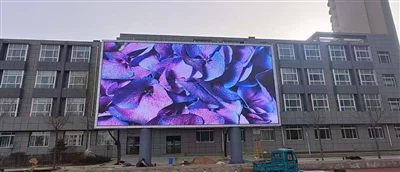
Outdoor LED displays, with their advantages of high brightness, high definition, and vivid colors, have found wide applications in numerous fields such as advertising, information display, and stage performances. However, being constantly exposed to the outdoor environment, they are inevitably subject to the impact of various extreme weather conditions, including heavy rain, heavy snow, high temperatures, strong winds, and lightning. These extreme weather conditions can cause damage to the hardware of LED displays, affect their normal operation, and even shorten their service life. Therefore, it is of vital importance to take effective protective measures to ensure the safe and stable operation of outdoor LED displays under extreme weather conditions.
II. Protection against Heavy Rain
(I) Waterproof Structural Design
Application of Sealing Strips: Sealing strips of high quality should be used at key locations such as the joints between display cabinets and the gaps between frames and screens of LED displays. These sealing strips must possess good elasticity and weather resistance to effectively block the infiltration of rainwater. For example, silicone rubber sealing strips, which have excellent water resistance, ozone resistance, and UV resistance, can maintain good sealing performance over long-term use.
Drainage System Setup: Reasonable drainage slopes and drainage holes should be designed at the top and bottom of the display. The drainage slope should be no less than 5° to ensure that rainwater can flow smoothly into the drainage holes. The diameter and number of drainage holes should be reasonably designed according to the size of the display and the amount of rainfall. Generally, 1 - 2 drainage holes with a diameter of 10 - 15mm should be set per square meter to quickly drain accumulated water and prevent rainwater from accumulating inside the display.
(II) Electrical System Protection
Use of Waterproof Junction Boxes: All electrical connection points, such as those of power cords and signal cables, should be protected by waterproof junction boxes. These waterproof junction boxes must have good sealing performance, with a protection rating of IP67 or above, to effectively prevent rainwater from entering the boxes and avoid electrical short circuits and other faults.
Power Supply Protection: LED displays should be equipped with waterproof power supplies, which should be installed in dry and well-ventilated locations. It is advisable to set up dedicated power supply protection boxes that have waterproof, dustproof, and moisture-proof functions. Sufficient heat dissipation space should also be provided to ensure that the power supply operates within the normal temperature range.
(III) Regular Maintenance and Inspection
Regular Cleaning: After heavy rain, it is necessary to promptly clean dirt and debris from the surface of the display to prevent corrosion caused by the mixture of rainwater and dirt. A soft, damp cloth can be used to gently wipe the surface of the display, and sharp or rough tools should be avoided to prevent scratching the screen.
Inspection of Sealing Conditions: Regularly check whether the sealing strips are aging, cracked, or detached. If any problems are found, they should be replaced in a timely manner. At the same time, check whether the drainage system is unobstructed and whether the drainage holes are blocked. If blockages are found, they should be cleared promptly.
III. Protection against Heavy Snow
(I) Structural Reinforcement
Increasing Support Structures: In areas prone to heavy snowfall, the support structures of LED displays should be reinforced. Depending on the size and weight of the display, the number of support columns can be increased or the diameter of the support columns can be enlarged to improve the load-bearing capacity of the support structures and prevent deformation or collapse of the display due to excessive snow accumulation.
Optimizing Structural Design: A reasonable structural design should be adopted to give the display a certain degree of snow resistance. For example, the display can be designed with a certain inclination angle so that snow can slide off automatically, reducing the time snow stays on the display. An inclination angle of 15° - 30° is generally appropriate, which can ensure smooth snow sliding without significantly affecting the display effect.
(II) Heating and Snow Removal Devices
Installation of Heating Films: Heating films can be installed on the back of LED displays. When heavy snow occurs, the heating films can be turned on to raise the surface temperature of the display and accelerate snow melting. The power of the heating films should be reasonably selected according to the size of the display and the ambient temperature. Generally, the power of the heating films per square meter is between 100 - 200W.
Setting Temperature Sensors: Temperature sensors should be installed inside the display to monitor the temperature of the display in real time. When the temperature drops below the set value, the heating device is automatically turned on; when the temperature reaches the set value, the heating device is automatically turned off, achieving intelligent control that can effectively remove snow while saving energy.
(III) Snow Removal
Manual Cleaning: During heavy snowfall, specially assigned personnel should regularly clean the snow on the surface of the display. Soft tools such as plastic shovels and brushes should be used to avoid scratching the surface of the display. At the same time, attention should be paid to personal safety, and cleaning operations should be avoided when the snow is too thick or icy.
Mechanical Cleaning Assistance: For large outdoor LED displays, mechanical cleaning equipment such as snow plows can be considered for auxiliary cleaning. However, when using mechanical cleaning equipment, operation specifications should be followed to avoid damaging the display.
IV. Protection against High Temperatures
(I) Optimization of Heat Dissipation Design
Configuration of Cooling Fans: A sufficient number of cooling fans should be installed inside the cabinets of LED displays to accelerate air circulation and timely dissipate the heat generated by the display. The rotation speed and air volume of the cooling fans should be reasonably selected according to the power and heat generation of the display. Generally, at least 1 - 2 cooling fans should be equipped per square meter of the display.
Design of Heat Sinks: Heat sinks should be designed at key heat-generating components of the display, such as power supplies and driver chips. The heat sinks should have good thermal conductivity to quickly transfer heat to the air and improve heat dissipation efficiency. Aluminum alloy is generally used as the material for heat sinks due to its light weight and good thermal conductivity.
(II) Improvement of Environmental Ventilation
Reasonable Layout: When installing LED displays, sufficient ventilation space should be ensured around them to prevent the display from being too close to other buildings or obstacles, which could affect air circulation. Generally, the distance between the display and surrounding obstacles should be no less than 1 meter to ensure good ventilation.
Setting Ventilation Openings: Ventilation openings should be set at the bottom and top of the display to form natural convection and accelerate heat dissipation. The area of the ventilation openings should be reasonably designed according to the size of the display and heat dissipation requirements. Generally, the area of the ventilation openings should be no less than 10% of the display area.
(III) High-Temperature Monitoring and Protection
Installation of Temperature Monitoring Equipment: Temperature sensors should be installed inside the display to monitor the temperature of the display in real time. When the temperature exceeds the set value, an alarm signal should be sent out promptly to remind staff to take corresponding measures.
Automatic Frequency Reduction Protection: When the temperature of the display is too high, the control system can automatically reduce the refresh rate and brightness of the display to reduce heat generation and protect the display from high-temperature damage. At the same time, an automatic recovery function after temperature restoration should be set to ensure that the display can quickly return to normal operating conditions.
V. Protection against Strong Winds
(I) Structural Wind Resistance Design
Wind Load Calculation: When designing the support structures of LED displays, the wind load under strong wind conditions should be accurately calculated according to local meteorological data. The calculation of wind load should take into account factors such as wind speed, wind direction, display size, and shape to ensure that the support structures can withstand the designed wind load.
Adding Wind-Resistant Components: Wind-resistant components such as diagonal cables and wind-resistant columns should be added to the support structures to improve the overall stability and wind resistance of the structures. Diagonal cables should be made of high-strength steel wire ropes or steel strands, and their diameter and number should be reasonably selected according to the wind load and the size of the support structures.
(II) Fixing and Reinforcement Measures
Ground Bolt Fixing: For floor-mounted LED displays, a sufficient number and size of ground bolts should be used to firmly fix the support structures to the ground. The diameter and length of the ground bolts should be reasonably selected according to the weight of the support structures and the wind load. Generally, the diameter of the ground bolts should be no less than M16, and the length should be no less than 500mm.
Wall Connection Reinforcement: For wall-mounted LED displays, the support structures should be reliably connected and reinforced to the wall. Chemical anchors or expansion bolts can be used to fix the support structures to the wall, and the number and thickness of connection plates should be increased to improve connection firmness.
(III) Strong Wind Warning and Response
Establishment of a Warning Mechanism: Establish contact with local meteorological departments to obtain timely warning information about strong winds. When a strong wind warning is received, preventive measures should be taken in advance, such as checking the firmness of the support structures and turning off the display.
Emergency Response Measures: During strong wind conditions, specially assigned personnel should monitor the display in real time. If shaking, abnormal noises, or other situations are found on the display, emergency response measures should be taken promptly, such as evacuating surrounding personnel and setting up warning signs to ensure personal safety.
VI. Protection against Lightning
(I) Grounding System Design
Good Grounding: A good grounding system should be set up for LED displays, with a grounding resistance of no more than 4Ω. The grounding system should use multiple grounding electrodes made of galvanized angle steel or steel pipes with a length of no less than 2.5 meters and a buried depth of no less than 0.8 meters. The grounding electrodes should be reliably connected with galvanized flat steel to ensure good electrical conductivity of the grounding system.
Equipotential Bonding: All metal components of the display, such as cabinets, brackets, and power supply housings, should be equipotentially bonded to keep them at the same potential under lightning conditions and avoid electrical sparks caused by potential differences, which could trigger electrical accidents. Equipotential bonding should use copper wires, and the cross-sectional area of the wires should be reasonably selected according to the current of the connected components.
(II) Installation of Lightning Protection Devices
Installation of Lightning Rods: Lightning rods should be installed at the top of LED displays. The height of the lightning rods should be reasonably designed according to the height of the display and the protection range. Lightning rods should be made of galvanized steel pipes with a diameter of no less than 25mm and a length determined according to needs. The lightning rods should be reliably connected to the grounding system to ensure that they can introduce lightning into the ground under lightning conditions and protect the display from lightning strikes.
Installation of Surge Protectors: Surge protectors should be installed at the power supply inlet and signal input/output ports of LED displays. Surge protectors should have good voltage limiting and current dividing functions to effectively suppress overvoltages and overcurrents generated by lightning and protect the electrical equipment and signal systems of the display from damage.
(III) Lightning Weather Operation Specifications
Turning off in Advance: Before lightning weather arrives, the LED display should be turned off promptly, and the power supply and signal connections should be disconnected to avoid damage to the display under lightning conditions.
Keeping Away from Equipment: During lightning weather, staff should keep away from LED displays and related equipment and should not stay or operate near the displays to ensure personal safety.
Why Choose Us as Your Trusted LED Display Partner?
With 15+ years of manufacturing experience, we are a leading LED display producer serving 60+ countries worldwide. Our core strengths include:
✅ OEM/ODM Support – Customized solutions tailored to your specific needs
✅ Certified Quality – All products meet international standards (CE, RoHS, ISO certified)
✅ Cost-Effective Production – Competitive pricing without compromising quality
✅ Global Logistics Network – Reliable shipping to all major markets
✅ R&D Innovation – Cutting-edge LED technology for superior performance
We specialize in indoor/outdoor LED screens, rental displays, and creative installations. From small batches to bulk orders, our flexible manufacturing capacity ensures timely delivery.
Let's build brilliant visual solutions together! Contact us today for a quote.
📱 WeChat: 86 18676738905
📧 Email: Ledhll88@163.Com
🌐 Website: Www.Hll-Ledscreens.Com
Send Inquiry