


5 Must-Have Features for Outdoor LED Displays in Extreme Weather Conditions
Jul 07, 2025
Leave a message
5 Must-Have Features for Outdoor LED Displays in Extreme Weather Conditions
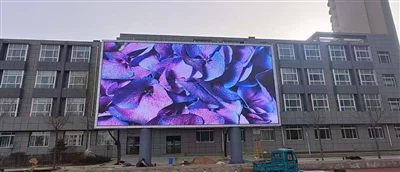
Against the backdrop of frequent extreme weather events, outdoor LED displays, as the core medium for urban information dissemination, need to be capable of coping with complex environmental conditions such as heavy rain, typhoons, high temperatures, lightning, and low temperatures. Their functional design must balance protective performance and operational stability to ensure the continuous provision of clear and safe visual displays under adverse conditions. The following systematically elaborates on the essential functions of outdoor LED displays in extreme weather from five dimensions: environmental adaptability, structural safety, energy management, intelligent protection, and operational efficiency.
I. High Protection Rating and All-Weather Sealing Design
Outdoor LED displays must achieve an IP65 or higher protection rating, forming a dual barrier against dust and rain. The sealing design must cover three core areas: modules, enclosures, and interfaces:
Module Encapsulation: Utilize potting processes to fill gaps between LED chips and PCB boards, creating a seamless protective layer that can withstand high-pressure water jets and salt spray corrosion.
Enclosure Structure: Employ double-layer waterproof enclosures with an inner layer of aluminum alloy frames to enhance structural strength and an outer layer of high-density silicone sealing rings to ensure no leakage risks at enclosure joints.
Interface Protection: Equip all power and signal interfaces with waterproof caps and use self-locking connectors to prevent rainwater ingress. In heavy rain conditions, humidity sensors integrated within the enclosure automatically activate heating and dehumidification functions when excessive humidity is detected, preventing short circuits caused by condensation.
For example, in typhoon-prone regions, displays must pass dynamic wind pressure tests simulating structural stability under 12th-grade typhoons (wind speeds ≥32.7 m/s). Their steel support structures should use Q345B high-strength steel, with welding points subjected to ultrasonic flaw detection to ensure no welding defects. Additionally, the back of the enclosure should feature drainage channels to quickly divert rainwater to ground drainage systems, preventing secondary damage from water accumulation.
II. Intelligent Thermal Management System
Extreme temperatures significantly impact the lifespan of LED displays: high temperatures accelerate light decay in LED chips, while low temperatures can cause material embrittlement. An intelligent thermal management system must achieve dynamic temperature control and energy efficiency balance:
High-Temperature Heat Dissipation: In subtropical regions, displays should integrate liquid cooling circulation systems that transfer heat via thermal conductive silicone grease to liquid cooling plates, with circulating coolant carrying the heat to external cooling towers. This system can reduce enclosure temperatures by 15-20°C and energy consumption by 30% compared to traditional air cooling.
Low-Temperature Preheating: In frigid regions, displays should preheat critical components using electric heating films before startup. When ambient temperatures drop below -10°C, the system automatically initiates a staged preheating process: first heating the power modules above 0°C, then the driver ICs to operating temperatures, and finally preheating the entire display to a stable operational state.
Intelligent Dimming: Combine ambient light and temperature sensor data to dynamically adjust screen brightness. For instance, the system increases brightness to over 8,000 nits in midday sunlight to ensure visibility and automatically reduces brightness to 60% when temperatures exceed 45°C to decrease heat generation.
III. Multi-Level Lightning Protection and Electromagnetic Shielding System
Lightning poses the greatest threat to outdoor displays, with damage pathways including direct strikes, induced surges, and lightning wave intrusion. A lightning protection system must establish a three-tier protection network:
Direct Strike Protection: Install early streamer emission lightning rods at the top of displays, with protection radii covering the entire display. Connect lightning rods to grounding electrodes via galvanized flat steel, ensuring grounding resistance ≤1 Ω.
Induced Surge Protection: Implement three-tier surge protection modules in power systems: install 100 kA surge protective devices (SPDs) in the main distribution box, 40 kA SPDs in display distribution cabinets, and 10 kA SPDs at driver board power inputs. For signal lines, employ optocoupler isolation and common-mode choke coil dual protection.
Electromagnetic Shielding: Construct enclosures from galvanized steel plates to form Faraday cage structures, effectively shielding against external electromagnetic interference. Additionally, adopt ground plane segmentation techniques during PCB design to isolate digital and analog circuits, reducing internal crosstalk.
IV. Impact-Resistant Structure and Dynamic Wind Load Compensation
Strong winds and hail during extreme weather can cause structural damage to displays. Impact-resistant design must address materials, structure, and algorithms:
Material Reinforcement: Use 6063-T5 aluminum alloy for enclosure frames, with a yield strength of 215 MPa-40% higher than ordinary aluminum alloys. Surface anodization creates a 10 μm thick oxide film, enhancing corrosion resistance.
Structural Optimization: Adopt honeycomb-ribbed enclosure designs that maintain lightweight construction (≤35 kg/m²) while improving torsional rigidity. Modules are secured using snap-fit connectors capable of withstanding pull forces exceeding 500 N.
Dynamic Compensation: Integrate wind speed sensors and accelerometers in displays to monitor wind pressure changes in real-time during typhoons. When wind speeds exceed 10th grade, the system automatically initiates dynamic dimming programs to reduce brightness on windward display surfaces and lower wind resistance. Simultaneously, adjustable enclosure angles (±15°) allow airflow to pass smoothly behind the display, reducing wind vibration coefficients.
V. Remote Monitoring and Self-Diagnostic System
Manual inspections during extreme weather pose safety risks, necessitating remote monitoring systems that enable real-time equipment status awareness and fault prediction:
Data Acquisition Layer: Deploy over 20 types of monitoring devices, including temperature and humidity sensors, current and voltage sensors, and smoke detectors, to collect data such as:
Enclosure temperature (accuracy ±0.5°C)
Power output voltage (accuracy ±0.1 V)
Failed LED chip count (detection accuracy ≤0.01%)
Intelligent Analysis Layer: Build fault prediction models using machine learning algorithms capable of providing 72-hour advance warnings for potential failures. For example, when driver IC temperatures consistently exceed 60°C, the system identifies cooling fan failure risks and automatically generates maintenance work orders pushed to operational personnel via mobile apps.
Emergency Response Layer: During lightning storms, the system automatically cuts non-essential power supplies while retaining communication module power to receive remote instructions. Simultaneously, it activates uninterruptible power supplies (UPS) to power critical components, ensuring 30 minutes of safe operation after power outages.
Why Choose Us as Your Trusted LED Display Partner?
With 15+ years of manufacturing experience, we are a leading LED display producer serving 60+ countries worldwide. Our core strengths include:
✅ OEM/ODM Support – Customized solutions tailored to your specific needs
✅ Certified Quality – All products meet international standards (CE, RoHS, ISO certified)
✅ Cost-Effective Production – Competitive pricing without compromising quality
✅ Global Logistics Network – Reliable shipping to all major markets
✅ R&D Innovation – Cutting-edge LED technology for superior performance
We specialize in indoor/outdoor LED screens, rental displays, and creative installations. From small batches to bulk orders, our flexible manufacturing capacity ensures timely delivery.
Let's build brilliant visual solutions together! Contact us today for a quote.
📱 WeChat: 86 18676738905
📧 Email: Ledhll88@163.Com
🌐 Website: Www.Hll-Ledscreens.Com
Send Inquiry